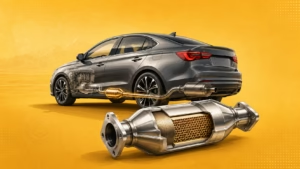
Introduction: Hyundai and Kia owners often check the catalytic converter price after a warning light, loss of power, failed emissions test, or costly repair quote. Others have removed an original unit and want to know if it still has recycling value. The badge on the vehicle gives a useful starting point, but it does not set the final value. The year, engine, exhaust layout, part markings, origin, and physical state all matter.
Key Takeaways
- A model name alone is not enough for an accurate quote.
- Original factory units often differ from aftermarket parts.
- Diagnosis should come before replacement.
- Clear photos and visible markings improve valuation accuracy.
- Damage, missing material, and prior repairs can affect value.
- Engine faults should be fixed before a new unit is fitted.
- A part-specific inspection is more useful than an online estimate.
Why do Hyundai and Kia owners check converter values?
Owners usually need to plan a repair, compare replacement choices, or sell an old original unit. Each goal needs a different type of assessment.
A driver with a check-engine light may want a rough repair budget. A workshop may need to identify the right replacement. A dismantling yard may have several removed parts that require separate checks. Meanwhile, a private owner may simply want to know whether an old factory unit has recoverable material.
These cases should not be treated as one question. Replacement cost includes the part, fitting work, diagnosis, and any related repairs. Recycling value concerns the removed unit itself. It depends on its identity, internal material, and condition.
Online lists can offer a broad reference. However, they may group several engines, years, and market versions under one vehicle name. A quote based only on “Hyundai Accent” or “Kia Rio” may therefore miss key details.
Which Hyundai and Kia models are commonly assessed?
Compact sedans, hatchbacks, crossovers, and older high-mileage cars are commonly assessed. Accent, Solaris, Rio, and related model families often raise questions because several generations and engine versions exist.
Why can two similar cars use different exhaust parts?
For example, a Hyundai Accent catalytic converter may differ by generation and engine. Its location can also vary within the exhaust system. One version may place the main unit near the engine, while another exhaust layout may use more than one emissions component.
The same issue applies to the Solaris catalytic converter. A familiar model name does not confirm the exact factory part. The vehicle identification number, engine code, production details, and markings on the housing provide stronger evidence.
Rio owners face similar questions. A Kia Rio 3 catalytic converter should be identified through its actual details rather than through body shape alone. Likewise, a search for a Kia Rio catalytic converter price may return broad figures that do not reflect the installed unit.
What vehicle information should an owner check?
Check the VIN, production year, engine size, engine code, and market version where available. Then compare that information with the removed part and its visible markings.
Do not rely on a registration description alone. It may identify the model and engine capacity, but it may not show the full exhaust configuration. Previous repairs can also mean that the installed unit is not the factory part.
The official Kia parts catalog shows why component records are tied to specific part entries rather than broad vehicle names. When available, a part number, catalog record, or repair invoice can help confirm what was fitted.
What identification details give the clearest starting point?
The most useful details link the vehicle record to the physical unit. The table below shows what to collect before seeking a quote.
| Identification detail | Why it matters | What to provide |
|---|---|---|
| Vehicle model | Gives an initial model family | Accent, Solaris, Rio, Sportage, Tucson, or another model |
| Production year | Helps separate generations and revisions | Exact year rather than a broad year range |
| Engine details | Different engines may use different exhaust layouts | Engine size, fuel type, and engine code if known |
| VIN | Helps confirm the vehicle specification | A clear typed record or readable photo |
| Part markings | May identify the actual fitted unit | Close photos of codes, stamps, and labels |
| Installation history | Shows whether the unit may be original or replaced | Invoices, workshop notes, or the owner’s known history |
What causes value differences between similar units?
Value can differ because of origin, internal condition, housing state, markings, and prior modification. The vehicle model is only one part of the assessment.
Does an original factory unit differ from an aftermarket part?
Yes. An original factory unit and an aftermarket replacement should not be treated as identical. Their construction, markings, internal content, and intended specification may differ.
A factory unit will often have manufacturer codes or stamped references. An aftermarket product may carry another brand, a universal reference, or a different housing design. A seller should disclose any known replacement history instead of presenting every removed part as original.
For imported vehicles or US-spec replacement parts, the US Environmental Protection Agency provides guidance about the use, purchase, and installation of aftermarket converters. Local rules can differ, so owners should also follow the requirements that apply where the vehicle is registered and used.
Why does the internal substrate matter?
The internal ceramic or metallic structure is a key part of the unit. Missing, broken, melted, or heavily contaminated material can change the assessment.
A loose internal block may create a rattle. Severe heat can damage or melt the structure. An impact may crack it even when the outer shell looks acceptable. If a unit has been opened, emptied, or altered, that fact should be stated before evaluation.
Photos cannot always prove the full internal state. They can still reveal cuts, dents, welds, heat marks, corrosion, missing sections, and other signs that an in-person check may be needed.
How do previous exhaust repairs affect the result?
Previous work can obscure markings or change the housing. It can also make it harder to confirm whether the part is complete and original.
Look for fresh welds, patched sections, non-factory clamps, mismatched pipe sizes, and cut sensor mounts. These signs do not always mean the unit has no value. They do mean that the evaluator needs clear and honest information.
For a wider explanation of part-specific differences, owners can read the guide on why some converters cost more than others. It helps show why a generic online range cannot replace a check of the actual unit.
Which condition factors can change an assessment?
Completeness and internal condition have a direct role in the review. The table below separates common observations from the information an evaluator may request.
| Condition factor | What an owner may notice | Why it should be disclosed |
|---|---|---|
| Intact housing | No major holes, crushed areas, or open seams | Helps show whether the assembly appears complete |
| Cut pipe ends | The unit was removed with a saw or cutting tool | Shows how it was removed and whether the body was affected |
| Heat damage | Discoloration, deformation, or melted internal material | May point to severe overheating |
| Impact damage | Dents, cracks, or a loose rattle | May indicate damage to the inner structure |
| Opened housing | Non-factory seams, welds, or access cuts | May mean material was removed or the unit was modified |
| Readable markings | Codes and stamps remain visible | Supports more accurate identification |
Which symptoms suggest a converter problem?
A warning light, rattle, weak acceleration, higher fuel use, unusual smell, or failed emissions test may point to a problem. None of these signs proves that the converter itself has failed.
Does a check-engine light mean immediate replacement?
No. A warning light means the vehicle needs diagnosis, not an automatic new part. Sensors, ignition faults, fuel delivery problems, and exhaust leaks can produce related symptoms.
A scan code is useful, but it is only one clue. A technician may also check oxygen sensor readings, exhaust leaks, engine performance, fuel control, and the physical state of the unit. Clearing a code without finding the cause can delay a proper repair.
Owners can review this practical guide on how to test whether a converter is bad before approving major exhaust work. A qualified inspection remains important when the vehicle has several possible faults.
What can cause rattling or poor performance?
Rattling may come from loose internal material, a heat shield, or another exhaust part. Poor performance can result from restricted exhaust flow, but engine and fuel faults can cause similar problems.
Listen for the location and timing of the noise. A sound heard only at idle may have a different cause from one that appears under load. If power falls sharply or the exhaust becomes very hot, stop using the vehicle and seek professional advice.
Misfires, excess fuel, oil burning, or other engine issues may expose an exhaust catalyst to severe heat or contamination. Replacing the unit without fixing the related fault can put the new part at risk.
Should the unit be replaced, repaired, or evaluated for sale?
The right path depends on diagnosis and the state of the old part. A failed unit may need compliant replacement, while an original removed unit may be suitable for professional evaluation and recycling.
What should happen before a replacement is fitted?
The cause of failure should be found and repaired first. The replacement must also suit the vehicle, engine, exhaust layout, and applicable emissions rules.
Ask the workshop to explain its test results. Keep the invoice, product details, warranty papers, and part reference. These records can help with later service and show what was installed.
- Hollowing out the original converter housing
- Fitting an unsuitable substitute
When can an old original unit be sold?
An old original unit can be assessed after lawful removal when its identity and condition are clear. It should come from a known vehicle or a documented business source.
A professional buyer will want more than a verbal model description. Photos, markings, engine details, and removal history help support a fair review. For workshops or private owners in Kazakhstan, Qazaqkat offers car catalytic converter assessment and responsible recycling.
Do not clean, open, or grind the part before requesting a quote. These actions can remove identifying details or damage internal material. Leave it in the state in which it was removed, unless safe handling requires another step.
How can you request a more accurate quote?
Send complete vehicle details, clear images, visible markings, and an honest condition report. Better input helps the evaluator identify the part and explain the next step.
- Identify the vehicle. State the make, model, body style, production year, and VIN where appropriate.
- Confirm the engine. Include engine size, fuel type, and engine code if it is available.
- Photograph the full unit. Take images from several sides in good light.
- Capture every marking. Add close views of stamped codes, labels, logos, and serial references.
- State whether it is original. If you are unsure, say so and include any repair records.
- Describe its condition. Mention rattles, dents, cracks, heat marks, corrosion, or missing areas.
- Explain how it was removed. State whether the pipes were unbolted or cut and whether the housing was opened.
- Separate multiple units. Give each part its own photo set and vehicle details.
How should photos be taken?
Use bright, even light and keep the camera close enough to read codes. Include one wider image so the full shape and pipe layout remain visible.
Clean only loose surface dust if needed. Do not use grinding tools on stamps or welded areas. Place the unit on a plain background and take photos from the inlet, outlet, top, bottom, and both sides.
If a code is faint, send several angled images rather than typing a guess. A wrong character can lead to the wrong reference. For business batches, label each photo set so units are not mixed during review.
Why should online estimates be treated with care?
Online estimates are broad reference points. They may be old, based on another market, or linked to a different engine and part code.
A realistic review uses the actual part. It should consider whether the unit is factory-made, complete, damaged, opened, or previously replaced. No single public list can account for every Hyundai and Kia configuration.
Metal content also differs between part designs. Therefore, the size or weight of the housing does not by itself show the final recycling value. A small original unit should not be compared with a larger aftermarket shell only by appearance.
How can owners make a safer final decision?
Start with diagnosis, confirm the exact part, and compare clear repair and recycling options. Avoid decisions based only on a warning light or a broad online figure.
If the vehicle still runs, ask a workshop to identify the fault before removing anything. If the old unit has already been taken off, keep it complete and gather its details. A clear paper trail helps both private owners and automotive businesses.
Qazaqkat supports private vehicle owners, dealerships, workshops, dismantling yards, and industrial partners across Kazakhstan. Customers can request an assessment by phone at +7 708 838 63 26 or +7 707 470 85 33, or by email at info@qazaqkat.kz. The office is at 9 Kendala Street, Astana 010006, Kazakhstan.
Summary
Hyundai and Kia converter values cannot be judged by model name alone. Year, engine, market version, exhaust layout, part markings, origin, internal state, and prior repairs all affect the result.
Diagnosis should always come before replacement. Sensors, leaks, ignition faults, and fuel issues can produce similar symptoms. When replacement is justified, related engine faults should be repaired and a suitable compliant part should be fitted.
For a removed original catalytic converter, a transparent inspection and part-specific assessment provide a sound basis for sale or recycling. Clear photos and honest details allow Qazaqkat to give Hyundai and Kia owners a more useful response without relying on a generic estimate.
FAQ
Can a Hyundai or Kia model name confirm the exact value?
No. The model provides only an initial reference. The production year, engine version, emissions specification, drivetrain, market, part number, and condition may all change the result. Two cars with the same badge can use different exhaust components. A clear photo set and readable markings are more useful than a model name by itself.
Should I replace the unit as soon as the warning light appears?
Not without diagnosis. A warning light can relate to oxygen sensors, an exhaust leak, a misfire, fuel control, or another engine fault. A technician should read the codes and test the related systems. Replacing an expensive exhaust part before finding the true cause can waste money and leave the original problem unresolved.
Can a damaged or cut unit still be evaluated?
Yes, but its condition must be shown clearly. Photograph the cut pipe ends, outer housing, markings, welds, dents, and any open areas. State whether the internal material appears complete and whether the housing was modified. Damage does not automatically prevent evaluation, though it may affect identification and the final assessment.
Is an aftermarket unit valued in the same way as an original one?
No. Original and aftermarket units may differ in construction, markings, specification, and internal material. Do not assume that two parts with similar shapes have the same value. Share the brand, code, invoice, and known replacement history. If the origin is uncertain, say so and let the evaluator review the available evidence.
What should I send when asking Qazaqkat for a quote?
Send the make, model, year, VIN or engine details, and clear photos of the complete unit. Include close images of every stamp or code. Explain whether it is original, damaged, cut from the exhaust, opened, or previously repaired. You can contact Qazaqkat by phone or email for guidance on the next step.