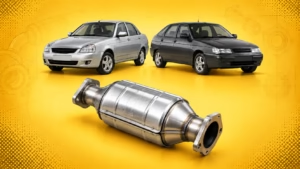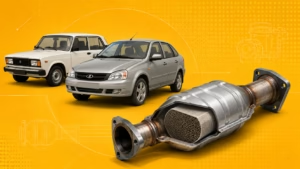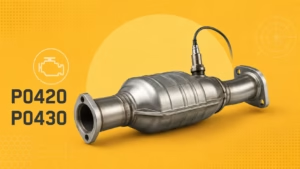
Introduction: A catalytic converter is a key part of a vehicle’s exhaust system. It treats exhaust gases before they leave the tailpipe, which helps reduce harmful emissions. For drivers in Kazakhstan, knowing the basics can make vehicle care, fault checks, removal, sale, and recycling much easier. It can also help owners avoid poor advice when a warning light appears or an old converter reaches the end of its useful life.
Key Takeaways
- The converter treats exhaust gas before it leaves the vehicle.
- It usually sits between the engine and the rear exhaust section.
- Heat, a coated internal structure, and precious metals support the treatment process.
- Engine faults, overheating, contamination, and physical damage can shorten its life.
- Gasoline converters and diesel particulate filters serve different main roles.
- Value depends on the unit’s identity, metal content, design, and condition.
- Professional evaluation supports fair sale and responsible recycling.
What does this exhaust part do?
It changes harmful parts of engine exhaust into less harmful substances before the gas leaves the tailpipe. It forms part of the vehicle’s emissions control system.
Many drivers first ask what is a catalytic converter after an engine warning light, an exhaust repair, or a request for an emissions check. In simple terms, it is a metal housing that contains a specially coated internal structure. Hot exhaust flows through that structure while chemical reactions take place on its surface.
The part does not trap all exhaust like a sealed container. Gas must keep moving through the system. The inner channels provide a large treated surface while still allowing exhaust to pass toward the rear pipe.
The European Environment Information and Observation Network defines a catalytic converter as equipment used to reduce air pollutants in exhaust gas. That short definition explains the main purpose, but vehicle owners also need to understand its place in the wider system.
The engine burns fuel and creates exhaust. Sensors monitor the process. The converter treats the gas, while pipes and a silencer guide it out of the vehicle. These parts work as a connected system. A fault before the converter can therefore affect the converter itself.
Why does the converter matter to a driver?
It matters because it supports cleaner exhaust and forms part of normal vehicle operation. Its condition can also affect fault diagnosis, repair choices, and the value of a removed unit.
A healthy converter helps the emissions system do its job. A damaged, contaminated, or restricted unit may lead to warning signs that need professional checks. Yet similar symptoms can come from the engine, sensors, ignition, fuel supply, or exhaust leaks. Replacing the converter without checking the cause can waste money and leave the true fault in place.
Drivers who want a simple explanation of its everyday role can read more about what a converter does in a car. The key point is that the unit treats the results of combustion. It cannot correct poor combustion at the source.
What is the difference between treatment and filtering?
Treatment changes certain exhaust components through reactions on a coated surface. Filtering mainly captures solid particles, so the two jobs are related but not identical.
This distinction matters for owners of diesel cars, vans, and mixed fleets. A diesel vehicle may have more than one emissions device in the exhaust line. One part may treat gases, while another may collect particulate matter. Their housings can look similar from underneath the vehicle.
The guide to a converter compared with a diesel DPF explains the difference in more detail. Correct identification helps during service, dismantling, and recycling. It also prevents a seller from describing one component as another.
How does the part work inside?
Hot exhaust passes through many small internal channels coated with active material. The coating supports reactions that reduce harmful exhaust components.
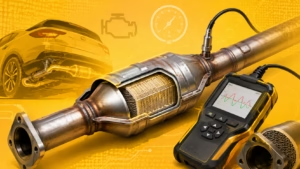
For anyone asking how a catalytic converter works, it helps to picture a compact flow path with a very large surface area. The internal substrate carries the coating. Exhaust reaches that coated area as it travels through the channels. Heat helps the unit operate as intended.
Platinum, palladium, and rhodium are among the valuable metals associated with automotive converters. Their presence is also why responsible recovery matters after a unit has been removed. These materials can return to the supply chain rather than remain in waste.
The converter does not consume fuel or add power. Its main job begins after combustion has taken place. Engine control, fuel delivery, ignition, sensors, and exhaust treatment all have separate roles, even though a fault in one area may place stress on another.
What does each internal layer contribute?
The housing protects the core, the substrate creates channels for gas flow, and the coating provides the active surface. Together, these parts let hot exhaust contact the treatment material without stopping normal flow.
The outer shell must cope with road use and exhaust heat. Inside, the substrate needs to remain in place. If the core breaks, melts, or becomes heavily contaminated, the available flow path or treated surface may fall.
A detailed explanation of how the converter works inside covers the substrate, coating, heat, and gas flow in plain language. Drivers do not need to become chemists, but knowing the basic structure helps them understand why cutting, crushing, or emptying a unit can affect both function and evaluation.
What does the internal construction show?
The table shows how the main sections contribute to exhaust treatment and why their condition matters. Exact designs vary by vehicle and manufacturer.
| Section | Main role | Why condition matters |
|---|---|---|
| Outer housing | Contains and protects the internal parts | Heavy impact or severe corrosion may expose or damage the core |
| Internal substrate | Creates many small paths for exhaust flow | Breakage or melting can reduce the working area and disturb gas flow |
| Active coating | Holds materials that support exhaust treatment | Contamination can reduce useful contact with the exhaust |
| Precious metal content | Supports the chemical treatment process | Type and amount influence professional recycling evaluation |
| Inlet and outlet | Guide gas into and out of the housing | Crushing or poor cuts can make identification and handling harder |
Where can drivers find it?
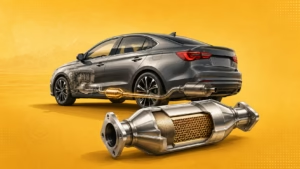
It is normally installed in the exhaust line between the engine and the rear exhaust section. The exact position depends on the model, engine, and exhaust design.
If you are trying to learn where the catalytic converter is located, start by following the exhaust path away from the engine. On some vehicles, the first unit sits close to the engine so it can heat up quickly. On others, a larger housing appears farther under the floor. Some exhaust systems contain more than one treatment unit.
The component often looks like an expanded metal section in the exhaust pipe. However, appearance alone may mislead. A silencer, resonator, diesel particulate filter, or other emissions device can have a similar shell.
Model-specific diagrams, part markings, service records, and a trained inspection provide better proof than shape alone. The guide to where the converter sits in the exhaust line gives a clearer visual and practical overview for owners preparing for service or sale.
Should an owner inspect it at home?
A basic visual check may help identify obvious damage, but owners should not work beneath an unsafe or poorly supported vehicle. A workshop is the safer place for close inspection and removal.
Exhaust parts can remain hot after the engine stops. Rusted fasteners and confined working space create further risks. Cutting into an unknown exhaust housing can damage the unit and expose internal material.
Before any removal, confirm why the work is needed. If the vehicle still runs, diagnosis should come first. If the vehicle has reached dismantling stage, keep any codes, labels, and identifiable sections intact where possible.
Can one vehicle have several emissions units?
Yes, some exhaust layouts contain several treatment components. Their number and position depend on the vehicle’s design.
This is common enough that sellers should avoid counting every large exhaust housing as the same item. A workshop or recycling specialist can review photos, markings, and the complete assembly. Clear identification supports a more accurate discussion about acceptance and value.
How does this part affect engine performance?
A working unit should allow exhaust to flow while treating it. A restricted or physically damaged unit may be linked with poor gas flow, but proper diagnosis must rule out other causes.
The catalytic converter in a car belongs to the exhaust side of the powertrain. It does not create engine power. However, severe internal damage or blockage can interfere with the exhaust path.
Drivers may notice an engine warning light, weak response, unusual heat, rattling, or changed exhaust sound. These signs do not prove that the converter has failed. A loose shield can rattle. An ignition problem can cause poor response. A sensor or exhaust leak may also trigger a fault.
Diagnostic trouble codes can guide a technician, but a code is not the same as a complete diagnosis. The QazaqKat guide to low-efficiency codes for drivers explains why the system and related engine conditions should be checked before a final repair decision.
What can damage or wear the unit?
Engine faults, contamination, overheating, physical impact, and long-term use can harm the unit. Driving conditions and vehicle care also affect its working life.
Unburned fuel entering the exhaust can create excess heat. Oil or other contamination may coat working surfaces. A hard impact beneath the vehicle can dent the shell or break the internal structure. Corrosion can weaken pipes and joints around the housing.
Road and climate conditions across Kazakhstan vary greatly. Urban trips, long highway use, rough roads, cold starts, and fleet duty place different demands on a vehicle. There is no single condition that tells every owner when replacement will be needed.
The overview of converter lifespan and common wear factors explains why service life depends on the engine, fuel system, driving pattern, heat exposure, and physical condition rather than age alone.
Why should the cause be fixed before replacement?
- Which codes or tests support this conclusion?
- Were ignition, fuel delivery, sensors, and leaks checked?
- What points to converter damage rather than another fault?
A new or sound replacement unit may suffer the same damage if the original engine fault remains. Finding the cause protects the repair and may prevent repeat failure.
For example, a technician may need to assess engine operation, ignition, fuel delivery, sensors, exhaust leaks, and signs of contamination. The exact checks depend on the vehicle and its symptoms.
Owners should ask the workshop what evidence supports its conclusion. Useful evidence may include fault-code data, a visual inspection, temperature or flow-related checks, and a review of engine condition. No single clue fits every case.
Why are platinum, palladium, and rhodium important?
These precious metals help the treatment reactions take place on the converter’s internal surface. They also give many removed units recycling value.
Metal content is not the same in every unit. Vehicle model, engine type, original design, and manufacturing specification can affect what is present. Size alone does not give a reliable answer. Two housings that look alike may have different internal content.
The guide to which metals make a converter valuable explains the role of platinum, palladium, and rhodium. It also shows why a professional evaluation matters when a private owner, workshop, dealer, or dismantling yard wants a fair assessment.
Does a larger housing always have more value?
No. Housing size alone does not show the amount or type of recoverable material inside.
Professional buyers may consider part identity, markings, vehicle application, construction, condition, and testing information. A complete original unit with clear identification can be easier to assess than loose, mixed, or heavily altered material.
That does not mean every damaged item has no value. Removed, cut, dented, or incomplete units may still be suitable for review. Owners should describe the condition honestly and provide clear photos before travel when possible. QazaqKat also explains the acceptance of removed or damaged converter units, which can help sellers prepare useful details.
What factors can affect an evaluation?
The table shows the main details a professional buyer may review. No single factor gives a complete answer by itself.
| Evaluation factor | What the seller can provide | Why it helps |
|---|---|---|
| Part identity | Clear photos of codes, labels, and the full housing | It helps connect the unit with its known design |
| Vehicle details | Make, model, engine, and year when known | It provides useful context for identification |
| Physical condition | Photos of cuts, dents, corrosion, or missing sections | It supports an honest review before acceptance |
| Internal condition | Information about a loose, broken, or missing core | It shows whether the recoverable material may be affected |
| Quantity and sorting | A clear count and separation of known units | It makes handling easier for workshops, fleets, and dismantlers |
| Professional assessment | Access to the unit for suitable evaluation | It supports a clearer explanation of the result |
Why do sale values differ between units?
Values differ because converter designs and precious metal content differ. Identity, condition, and the quality of the evaluation also matter.
This explains what a catalytic converter is for from both an environmental and recycling view. During service, its coated core treats exhaust. After removal, suitable processing can recover useful secondary raw material and return it to the supply chain.
A quote based only on weight or outer size may miss key details. A transparent buyer should explain what information is needed, how the unit will be identified, and whether its condition affects acceptance.
For a fuller view of the commercial factors, read why some converters cost more than others. The central lesson is simple: professional assessment is more reliable than assumptions based on appearance.
How can a seller prepare before asking for an evaluation?
Keep the unit identifiable, collect basic vehicle details, and take clear photos. Tell the buyer about damage, cuts, or missing material before requesting an assessment.
- Photograph the complete housing from more than one side.
- Take a close photo of any visible code, stamp, or label.
- Record the vehicle make, model, engine, and year if known.
- State whether the unit is still fitted or has been removed.
- Show any cut pipes, dents, cracks, corrosion, or loose material.
- Keep units separate if you have several different parts.
- Ask how identification and evaluation will take place.
Do not remove markings or clean the housing so harshly that codes disappear. Avoid opening the shell merely to see what is inside. Such action may damage the substrate and make safe handling harder.
What should a transparent buyer explain?
A transparent buyer should explain the acceptance process, the information needed, and how the unit is assessed. Communication should remain clear before any sale is agreed.
Sellers can ask whether the buyer needs photos first, whether damaged units can be reviewed, and what happens after acceptance. Workshops and fleet operators may also ask about sorting, repeated collections, records, and long-term cooperation.
QazaqKat serves private vehicle owners, car dealerships, repair workshops, dismantling yards, and industrial partners across Kazakhstan. Its main location is in Astana, and its work focuses on professional acceptance, recycling, responsible handling, and recovery of precious metals.
Why is responsible recycling better than disposal?
Responsible recycling keeps useful materials in circulation and reduces the risk of poor handling. It also supports a cleaner and more resource-efficient automotive sector.
An old unit contains metal housing material and may contain platinum, palladium, and rhodium within its internal structure. Professional processing aims to recover valuable material for reuse in the wider supply chain.
Throwing the part into mixed waste loses that resource. Informal cutting or careless storage may also spread dust or damage the core. Secure storage and transfer to a professional handler offer a clearer path.
The United States Environmental Protection Agency provides guidance on the proper use, installation, and purchase of aftermarket catalytic converters. Rules differ by country, but the source supports a broad point: emissions parts should match the vehicle’s needs and should not be treated as ordinary scrap.
How should a removed unit be stored?
Keep it dry, secure, identifiable, and separate from loose waste. Avoid breaking the core or leaving the unit where material may be lost.
A workshop should attach basic records when possible. These may include the source vehicle, removal date, known code, and reason for replacement. Private sellers can use a simple note and a set of photos.
For several units, avoid mixing intact parts with loose internal material. Clear separation makes counting, identification, transport, and review easier. It also reduces disputes about which unit came from which vehicle.
Can recycling support the circular economy?
Yes. Recovery allows useful materials from old components to return to industrial supply chains instead of remaining as waste.
This does not remove the need for sound vehicle maintenance. The first goal is to keep a working emissions system in service. Once a genuine replacement or dismantling decision has been made, recycling becomes the responsible next step.
That sequence matters: diagnose, repair when suitable, remove safely when needed, keep the unit identifiable, and send it for professional evaluation and processing.
What should Kazakhstan drivers remember before removal?
Confirm the fault, identify the part, and use a qualified workshop for removal. Then keep the removed unit and its markings intact for evaluation.
Drivers sometimes approve removal because of a warning light alone. Yet a warning light may point to several possible causes. Ask for the diagnostic findings and find out whether related engine problems have been checked.
According to the United States Bureau of Automotive Repair, theft can also leave a vehicle with a missing converter and related exhaust damage. Its advice on converter theft and emissions inspection concerns another legal system, but it shows why owners should document missing parts and use suitable replacements rather than improvised pipe sections.
Local legal, inspection, and repair requirements should always guide work carried out in Kazakhstan. A vehicle owner should not assume that advice written for another country sets local rules.
What records are useful for fleets and workshops?
Source vehicle details, part codes, photos, removal notes, and quantities are useful. Consistent records make later identification and evaluation easier.
Fleet users can assign a simple reference number to each removed unit. Workshops can match that number to a job record. Dismantlers can sort parts by known identity and physical condition.
Clear records also help teams explain why a part was removed. This can reveal repeat engine faults, poor repair choices, or patterns within similar vehicles. It also supports cleaner handover to a recycling partner.
How can owners avoid common selling mistakes?
Do not rely on shell size, hide damage, erase codes, or accept vague explanations. Ask for a clear process and share accurate information.
- Do not assume every exhaust housing is the same type of part.
- Do not cut open an intact unit just to inspect the core.
- Do not remove labels or grind away stamped codes.
- Do not describe an incomplete unit as complete.
- Do not compare quotes unless each buyer has reviewed the same details.
- Do not ignore the need to fix the engine fault that caused damage.
- Do not leave removed parts unsecured or mixed with general waste.
How can QazaqKat help with evaluation and recycling?
QazaqKat provides professional purchase, acceptance, and recycling services for automotive converters across Kazakhstan. The company supports private owners as well as automotive and industrial partners.
Clients can request information about pricing, service details, or partnerships before bringing in material. Clear photos and known vehicle details can make the first conversation more useful.
The office is located at 9 Kendala Street, Astana 010006, Kazakhstan. Clients can call +7 708 838 63 26 or +7 707 470 85 33. Email inquiries can be sent to info@qazaqkat.kz.
For a first-time seller, the most useful starting point is a plain description of the unit and its condition. For a workshop, dealership, fleet, or dismantling yard, the discussion may also cover quantities, sorting, ongoing acceptance, and partnership needs.
Summary
A driver who understands what is a catalytic converter in a car can make better choices about diagnosis, repair, sale, and recycling. The unit sits in the exhaust system and uses a coated internal structure, heat, and precious metals to treat exhaust gases.
Knowing what a catalytic converter is also helps owners avoid confusing it with a silencer or diesel particulate filter. Location and appearance vary, so part markings, vehicle records, and professional review are important.
Condition matters, but it is only one part of an evaluation. Design, identity, internal content, and available records can also affect the result. Sellers should keep codes visible, report damage honestly, and avoid breaking open the housing.
When a unit has reached the end of its useful life, QazaqKat offers catalytic converter is focused purchasing and recycling support across Kazakhstan. A clear consultation can help private owners, workshops, fleets, dealers, and dismantlers prepare the right details and arrange responsible handling.
FAQ
Can a vehicle run without this emissions part?
A vehicle may still start after removal, but the exhaust and emissions system will no longer work as designed. Removal may also cause warning lights, noise, exhaust leaks, poor repairs, and legal or inspection concerns. Drivers should use a suitable repair and follow applicable requirements in Kazakhstan.
Does an engine warning light prove the unit has failed?
No. A warning light or low-efficiency code can have several possible causes, including engine, sensor, fuel, ignition, or exhaust issues. A proper diagnosis should check the wider system before replacement.
Can a damaged or cut unit still be sold?
It may still be suitable for evaluation. Acceptance depends on identity, condition, remaining material, and the buyer’s process. Send clear photos and explain any cuts, dents, missing sections, or loose core material.
Why should the vehicle model and part code be provided?
Those details help identify the design and support a clearer evaluation. Outer size and weight do not reliably show internal precious metal content, so accurate identification is valuable.
How should a private owner contact QazaqKat?
Owners can call +7 708 838 63 26 or +7 707 470 85 33, or email info@qazaqkat.kz. QazaqKat’s office is at 9 Kendala Street, Astana 010006, Kazakhstan. Photos of the full unit, visible codes, damage, and known vehicle details can help with the first review.