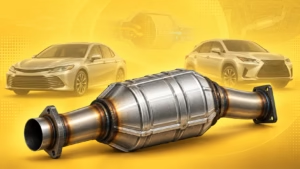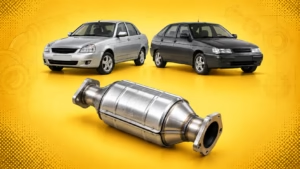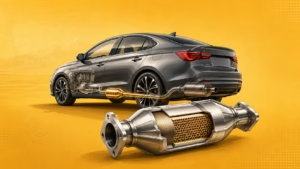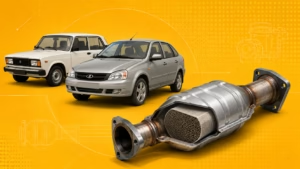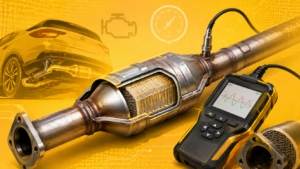
Introduction: Catalytic converters are valuable because they contain tiny amounts of high-value catalyst materials – mainly platinum, palladium, and rhodium – applied as a coating on a ceramic (or sometimes metal) core. This guide explains what metals are actually used, why different car models can have very different metal content, and how transparent buyers like Qazaqkat focus on composition and testing rather than “fixed prices.”
What metals are inside a catalytic converter?
Most modern catalytic converters rely on three “platinum group metals” (PGMs): platinum, palladium, and rhodium. Manufacturers apply them as an ultra-thin catalytic washcoat on a honeycomb core, because these metals speed up chemical reactions without being consumed quickly.
Industry references consistently describe these three as the key value drivers in automotive catalysts, while also noting that exact loadings vary widely by engine type, emissions standard, and vehicle design. Johnson Matthey’s explainer on metals used in catalytic converters.
Quick answer: what a catalytic converter is made of
A typical catalytic converter includes a steel outer shell, an insulating mat, a honeycomb “substrate” (often ceramic cordierite), and a porous washcoat where the active metals sit. If you want a plain-language refresher before you sell, this internal guide is helpful: A simple guide to what a catalytic converter is made of.
Inside the catalytic converter, where do the valuable metals sit?
The valuable metals are not chunky pellets you can pick out. They’re dispersed in a microscopic layer across the honeycomb surface to maximize contact with exhaust gases. That’s why accurate evaluation depends on proper identification and sampling, not guesswork.
To picture it, think of the converter like a sponge with countless channels. Exhaust flows through those channels. The coating lining each channel is where the chemistry happens, and where the PGMs are concentrated. That “spread out” design is also why recycling is specialized – the goal is to recover a small amount of PGMs from a large, mostly ceramic and steel part.
Which metal does what (and why the trio matters)?
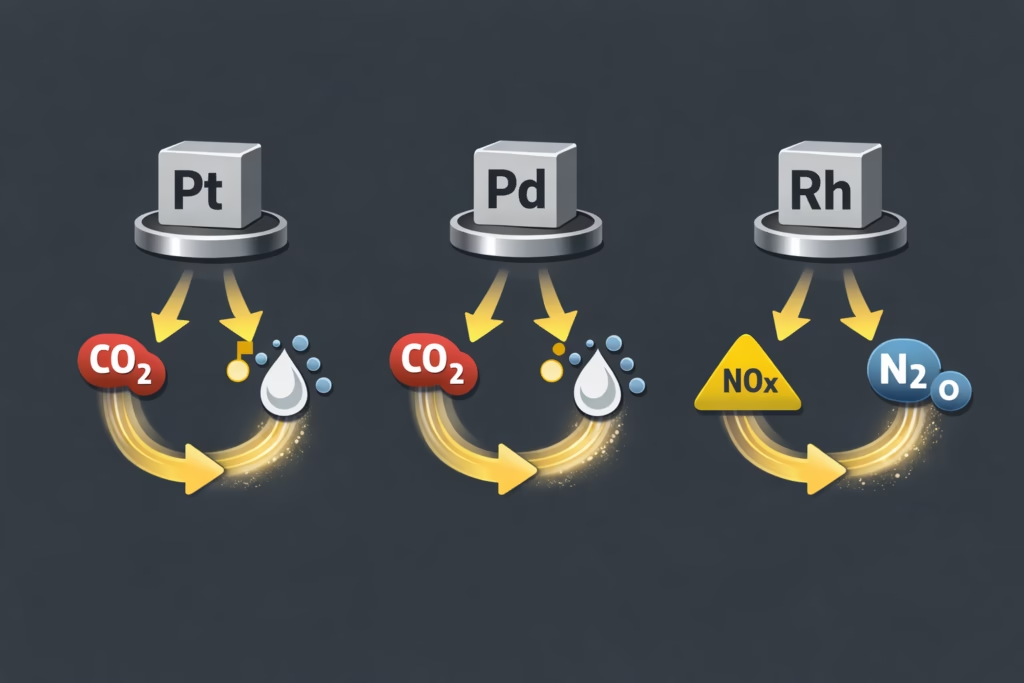
Each metal has a job. The mix depends on whether the vehicle is gasoline or diesel, and the emissions system design.
- Platinum often supports oxidation reactions, helping convert carbon monoxide (CO) and unburned hydrocarbons (HC) into less harmful gases.
- Palladium is also widely used for oxidation, especially in many gasoline applications.
- Rhodium is strongly associated with reduction reactions, helping convert nitrogen oxides (NOx) into nitrogen (N2) and oxygen (O2).
These roles are widely documented in technical summaries of catalytic converter chemistry and construction. Catalytic converter overview and materials (Wikipedia).
Why do different cars have different “metal content”?
Because the converter is engineered around emissions targets, not resale value. Two converters that look similar from the outside can have very different washcoat formulas and PGM loading.
Here are the most common factors that change composition:
- Engine type and fuel – gasoline vs diesel systems can use different PGM strategies.
- Emissions standard and model year – stricter regulations often push different catalyst designs.
- Vehicle size and power – higher exhaust flow can require more catalytic capacity.
- Original equipment vs aftermarket – aftermarket units may use different formulations and sometimes lower loadings.
- System layout – some vehicles use multiple catalyst units (close-coupled, underfloor, or combined systems).
As a result, anyone quoting a universal “one converter equals X” number isn’t being precise. Transparent acceptance companies talk about identification, category, and test results, because that’s what maps to real composition.
Table: what’s in a catalytic converter and why it affects evaluation
This table shows the major converter components, what they do, and what they mean for recycling and appraisal.
| Component | What it is | Why it matters when selling for recycling |
|---|---|---|
| Outer shell | Steel casing with inlet and outlet | Protects the core; not the main source of value |
| Substrate (monolith) | Ceramic honeycomb (commonly cordierite) or metal foil | Holds the washcoat; most of the unit’s bulk |
| Washcoat | High-surface-area layer on the substrate | Where the active catalyst is deposited; key for recovery |
| Catalyst metals | Platinum, palladium, rhodium in tiny amounts | Primary value driver; varies by model and category |
| Insulation mat | Heat-resistant wrap around the substrate | Helps durability; affects dismantling and handling |
| Contamination and aging | Soot, oil ash, thermal damage, poisoning | Can reduce performance; doesn’t reliably “remove” metals but can affect practical recovery pathways |
How do transparent buyers evaluate catalytic converters (without “fixed prices”)?
They start with identification, then move to category-based evaluation, and when needed, use measurement and industry-standard procedures. That approach is more honest because the value comes from composition, not the shape of the can.
In practice, a clear process often looks like this:
- Step 1: Identify the unit – check markings, type, and fitment. Even small differences can signal a different catalyst formula.
- Step 2: Classify it – gasoline, diesel oxidation catalyst, three-way catalyst, and other categories behave differently.
- Step 3: Assess condition – missing core, severe melt, or unusual damage can change what can be recycled.
- Step 4: Explain the logic – reputable buyers discuss why a unit falls into a given category and what drives its value.
This is also where “pricing literacy” helps you as a seller. If you understand that the important part is the PGM loading in the washcoat, you can ask better questions and spot vague promises quickly.
Where does Qazaqkat fit in for Kazakhstan sellers?
Qazaqkat focuses on professional acceptance and recycling workflows that make the transaction clearer for real people: private owners, workshops, dismantling yards, dealerships, and industrial partners. If your goal is to sell responsibly, it helps to work with a buyer that speaks in terms of categories, composition, and transparent evaluation.
For a practical overview of how the acceptance and recycling process works across Kazakhstan, see the service page for precious metals in a catalytic converter. It’s especially useful if you’re comparing options and want a straightforward, compliance-minded route.
If your main question is specifically about the role and relevance of platinum in a catalytic converter and how it ties back to real converter categories, that same service page gives the right context for evaluation and responsible processing.
Can I tell metal content by looking at the converter?
Not reliably. Exterior size, weight, or shell shape can hint at category, but they can’t confirm the catalyst recipe or PGM loading. Two units can look alike and still differ in internal coating formulation.
For sellers, the safest mindset is simple: treat visual inspection as a first step, then ask for identification-based evaluation. If you want additional context on function and upkeep (which often explains why some units fail early), this internal article adds helpful background: Purpose, operation, and maintenance of a catalytic converter in a car.
Why market demand matters, but shouldn’t be your only compass
PGMs are industrial materials used far beyond cars, so demand shifts over time. That demand affects recycler economics, but it still doesn’t turn your converter into a “standard unit” with a universal payout.
What you can do instead is focus on controllables:
- Keep the converter intact until evaluation. A broken or missing core is a different category.
- Share vehicle details when possible (model, engine, year). It improves identification accuracy.
- Choose a buyer that explains the evaluation basis, not just the number.
That kind of conversation is exactly why composition-based language is a good sign. It suggests the buyer is thinking like a recycler, not a reseller making broad promises.
For a complete overview of this topic, read Catalytic Converter Basics for Kazakhstan Drivers.
Summary
Catalytic converters are valuable because the washcoat contains platinum, palladium, and rhodium – applied in tiny amounts but critical for emissions chemistry. Metal content varies widely by vehicle type and converter category, so transparent evaluation focuses on identification and composition rather than “fixed prices.” If you’re in Kazakhstan and want a clear, responsible path to sell or recycle a used converter, Qazaqkat’s acceptance and recycling service is designed around straightforward communication, proper handling, and environmentally responsible processing.
FAQ
What metal is in a catalytic converter?
Most automotive catalytic converters contain platinum, palladium, and rhodium as the active catalyst materials. They sit in a thin washcoat on the honeycomb core, not as solid chunks you can separate by hand.
Is there gold or silver inside the catalytic converter?
Standard automotive catalysts are primarily based on platinum group metals, not gold or silver. If someone claims otherwise without documentation, ask for a clear explanation of the converter category and how they verified composition.
Does a diesel catalytic converter have the same metals as a gasoline one?
Often no. The metal mix and the emissions devices can differ (for example, diesel oxidation catalysts vs gasoline three-way catalysts). That’s one reason a buyer should identify the unit instead of assuming all converters are equal.
What changes the value the most when I sell a used converter?
The biggest drivers are converter type and PGM loading, which depend on the vehicle and emissions design. Condition also matters, especially if the substrate is missing, melted, or heavily damaged.
How can I prepare my catalytic converter for a transparent evaluation?
Keep it intact, avoid mixing it with other scrap, and share any vehicle details you know. If you’re unsure what you have, contacting a professional acceptance company for identification and clear next steps saves time and reduces misunderstandings.