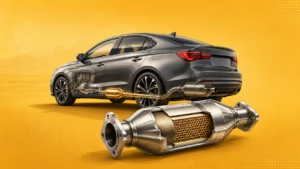
Introduction: Lada and VAZ owners often ask whether an old exhaust unit has resale value, needs repair, or should be replaced. The answer depends on the exact model, production year, engine, unit code, and condition. A visual check alone rarely gives a fair result. If you want to learn the likely catalytic converter price, start by identifying the vehicle and checking the original part rather than relying on a generic online quote.
Key Takeaways
- Lada and VAZ exhaust systems can differ by model, engine, year, and market.
- An original unit may have a different recycling value from an aftermarket part.
- The stamped code and internal condition matter more than the outer shell.
- Engine faults can damage a replacement if they remain unfixed.
- Never judge value by vehicle age or weight alone.
- Keep removed units intact and dry before professional evaluation.
- Use a qualified buyer that explains how the assessment works.
Why do Lada and VAZ models need individual checks?
Lada and VAZ vehicles do not all use one standard exhaust treatment unit. Parts can change across model generations, engine types, production years, and emission versions.
Two cars that look almost the same may have different exhaust layouts. A later engine update may use another manifold, sensor arrangement, or part code. Previous repairs can also change what remains under the car.
This is why a seller should provide more than the model name. For example, saying that a unit came from a VAZ 2110 gives useful context, but it may not confirm the exact application. The engine size, year, visible code, and clear photos can make the check far more reliable.
From Qazaqkat’s experience accepting removed units, specialists often find that the vehicle model named by the owner does not fully match the part that arrives for inspection. Earlier exhaust repairs, replacement sections, and missing markings are common reasons why a careful check is needed before assessment.
The official LADA original spare parts catalog shows why part identification matters. Vehicle parts belong to defined applications, so a name such as Granta or Vesta does not always identify one part for every version.
Which details should an owner collect first?
Collect the model, year, engine details, part markings, and several clear photos. These details help a specialist narrow down the unit before an in-person inspection.
- Vehicle model and generation
- Production year
- Engine size and fuel type
- Vehicle identification details, when relevant
- Code or stamp on the metal shell
- Photos of both sides and the full exhaust section
- Information about past exhaust repairs
- Whether the internal core remains present
Clean loose dirt from the stamped area with care. Do not grind, polish, or cut the shell to expose a code. Rough work may remove useful markings or damage the unit.
How do common VAZ and Lada applications differ?
They mainly differ in design, location, engine pairing, sensor layout, and production period. Their outer shape may also vary, but shape alone does not prove identity or value.
Older VAZ vehicles may have had several exhaust repairs during their service life. Some still carry an original factory part. Others may have a replacement section, an empty shell, or a modified pipe. Newer Lada vehicles may use a more integrated assembly close to the engine, depending on the application.
Owners should therefore separate the vehicle name from the part identity. A genuine factory unit removed from one version may not match the unit fitted to another version of the same model family.
What differences should owners expect across popular models?
Expect differences in mounting position, shell design, markings, and the way the unit connects to the exhaust. The following comparison is a practical guide, not a part-number list.
Comparison of common Lada and VAZ evaluation points
| Model or model family | What to check | Common source of confusion | Useful evidence |
|---|---|---|---|
| VAZ 2110 family | Year, engine, shell code, and repair history | Assuming every 2110 uses the same unit | Full-part photos and visible markings |
| VAZ 2114 family | Engine version, sensor points, and internal condition | Using a web quote without confirming the code | Code photo, vehicle year, and engine details |
| Lada Granta | Generation, engine, exhaust layout, and originality | Confusing a factory unit with a later replacement | Part markings and service records |
| Lada Kalina | Production period, engine, and assembly shape | Matching by appearance alone | Several photos from different angles |
| Lada Priora | Engine application, code, and signs of modification | Ignoring earlier exhaust work | Vehicle data and a complete unit |
| Lada Vesta or XRay | Exact version, engine, and fitted assembly | Treating all newer models as identical | Catalog data and physical inspection |
What should VAZ 2110 owners know?
The model name gives only the first clue. A VAZ 2110 catalytic converter still needs identification by application, markings, and physical condition.
Do not assume that a part removed from an older car has no value. In contrast, do not assume that age makes it rare or valuable. The contents and identity of the actual unit remain the key points.
If the exhaust has been repaired, ask where the removed section came from. A workshop may replace a larger pipe assembly, so the loose unit may include extra metal that has little bearing on the material inside the core.
What should VAZ 2114 owners know?
Owners should treat advertised values as rough references until the exact part has been checked. A search for VAZ 2114 catalytic converter price may return figures for different units, conditions, or even unrelated applications.
A professional assessment should confirm whether the shell is original, whether the internal core remains inside, and whether the visible code matches the claimed application. Photos can support an early review, but a physical check offers a firmer basis for acceptance.
What should Granta owners know?
Granta owners should confirm the year, engine, and exact exhaust assembly before buying or selling a unit. The term catalytic converter for Lada Granta can describe more than one application.
A replacement must suit the vehicle rather than merely fit into the available space. Sensor positions, pipe connections, and the wider engine management system all matter. For recycling, the evaluator will also check whether the part is a factory unit or a later replacement.
The same caution applies when searching for a Granta catalytic converter. A listing may show a similar shell, yet similarity does not confirm a correct match.
What determines the value of an old unit?
Value depends on confirmed identity, internal material, condition, and the evaluator’s current assessment method. Vehicle make and model help, but they do not settle the final result.
The ceramic or metallic core can contain platinum, palladium, and rhodium. These materials support the exhaust-cleaning reactions. Their type and recoverable amount can differ between units, so weight alone cannot provide an accurate assessment.
An empty or partly missing core changes the result. Heavy damage, contamination, mixed parts, and unclear markings can also affect how easily a buyer can identify and process the unit.
Owners who want more background can read why some converter units are worth more than others. The main lesson is simple: a vehicle name is not a complete valuation method.
Which factors matter during professional evaluation?
A professional checks several points together rather than using one quick sign. This reduces the risk of pricing a factory unit as an unknown part or mistaking a replacement for an original.
Key factors used to assess a removed exhaust unit
| Factor | Why it matters | What the owner can provide |
|---|---|---|
| Part code | It helps identify the unit and its likely application | A sharp, well-lit photo of the stamp |
| Vehicle details | They help confirm whether the claimed application is plausible | Model, year, engine, and fuel type |
| Original or aftermarket status | Different products may have different internal compositions | Repair invoice, brand marks, or service history |
| Core condition | A missing or damaged core changes recoverable material | An intact unit and honest damage details |
| Physical alteration | Cuts and welded sections may hide earlier changes | Photos showing the full shell and seams |
| Inspection method | A consistent process supports a clear assessment | Access to the complete part for inspection |
Why can online quotes be misleading?
Online quotes often lack enough information to confirm the exact unit. They may refer to another code, a complete original part, or a unit with a different internal condition.
Some listings also confuse a replacement cost with recycling value. These are separate questions. A retail replacement includes manufacturing, distribution, and fitting concerns. A removed unit receives an assessment based on its identity and recoverable contents.
For a useful first estimate, send the same clear set of details to the evaluator. Avoid cropped photos, unreadable stamps, and claims based only on the vehicle badge. A buyer can assess a car catalytic converter more reliably when the owner provides complete and accurate information.
How can you tell if the unit may be failing?
Warning lights, reduced power, unusual exhaust smells, rattling, or poor engine performance may point to a problem. However, these signs can also come from other engine or exhaust faults.
Do not replace the part based on symptoms alone. A workshop should check fault codes, sensor readings, ignition condition, fuel delivery, leaks, and the exhaust path. This can help prevent the removal of a working unit.
A damaged internal core may rattle if pieces have broken loose. A blocked exhaust path may affect engine performance. Yet a failed oxygen sensor or an engine misfire can produce similar warning signs. Proper diagnosis matters.
Symptoms that need diagnosis before replacement
These warning signs can point to a failing catalytic converter, but they can also come from ignition, fuel, sensor, or exhaust faults. Check the cause first to avoid replacing a working part.
Symptoms alone are not proof. Diagnose the engine, sensors, and exhaust path first, then replace the unit only if testing confirms it is the real cause.
Can an engine fault damage the replacement?
Yes. If the engine sends unburned fuel, oil, or other contaminants into the exhaust, a new unit may suffer damage as well.
Fix the cause before fitting another part. Misfires, fuel control faults, oil burning, and cooling system problems deserve attention. Replacing only the exhaust unit may hide the issue for a short time rather than solve it.
For more detail, see this guide to common causes of a clogged converter. It explains why engine health and exhaust performance connect so closely.
Should owners remove a working factory unit?
No. A working emissions part should remain in service unless diagnosis shows that replacement is needed.
Removing it can increase harmful exhaust output and may cause warning lights or poor engine control. It can also create inspection or legal concerns under the rules that apply where the vehicle operates.
The United States Environmental Protection Agency provides guidance on using, installing, and buying aftermarket units. Kazakhstan owners should follow local requirements, but the source highlights a sound principle: replacement should use a suitable part and should not serve as an excuse to remove a functioning emissions control device.
How should you choose a replacement?
Choose by confirmed vehicle application, not by shell shape or the lowest listed cost. Check the model, engine, year, part reference, sensor layout, and installation requirements.
Ask the seller to state which vehicle versions the part supports. Compare that information with the removed unit and a reliable parts catalog. If a workshop will fit the part, let the technician inspect the exhaust before purchase.
According to the California Air Resources Board, aftermarket units in California must meet defined application and installation rules. Those rules do not govern Kazakhstan, but they show why vehicle-specific matching and local compliance deserve attention.
Is an aftermarket unit always a poor choice?
No. A suitable aftermarket unit may be a practical replacement when it matches the vehicle and meets applicable requirements. Quality and correct application matter more than the label alone.
Still, buyers should ask clear questions. Does the unit fit the exact engine version? Are the sensor locations correct? Does it come from a traceable supplier? Will the installer confirm the cause of the original failure?
A very cheap universal part may need extra cutting or welding. That can make fitting harder and may not address the vehicle’s actual needs. Compare the full job, not just the purchase amount.
How should you prepare an old unit for sale?
Keep it complete, dry, and easy to identify. Do not remove the core, crush the shell, or mix pieces from several units.
- Ask the workshop to return the full removed part.
- Confirm which vehicle and engine it came from.
- Photograph the unit before transport.
- Take close photos of all codes and marks.
- Keep related cut pipe sections if they contain useful identification marks.
- Store the part in a dry place.
- Contact a professional purchaser for evaluation.
Tell the evaluator about any known damage or modification. Clear details save time and support a fair process. If the core has broken, keep the unit contained so loose material does not scatter.
What should a transparent buyer explain?
A transparent buyer should explain what information is needed, how the unit will be identified, and what affects the final assessment. Communication should remain clear before acceptance.
At Qazaqkat, specialists use the photos and vehicle details as a starting point, then compare them with the physical unit at acceptance. This approach helps explain why an initial estimate may need confirmation when the shell, markings, or core condition differs from the information provided.
Ask whether the buyer checks codes, condition, and internal material. You can also ask when the quoted amount becomes final and what happens if the physical unit differs from the photos.
A good process should not depend on pressure or vague promises. Owners need enough information to make a calm decision. Workshops and dismantling yards may also need records for batches of units, especially when several similar shells arrive together.
What mistakes reduce the chance of a fair assessment?
The main mistakes are cutting the shell, losing the code, guessing the application, and accepting a quote that lacks a clear basis. Poor records also make similar parts hard to separate.
- Do not remove or crush the internal core.
- Do not grind away stamped markings.
- Do not assume every unit from one model has equal value.
- Do not present an aftermarket unit as a factory part.
- Do not mix loose material from different units.
- Do not confuse replacement cost with recycling value.
- Do not hide cracks, cuts, or missing contents.
For business sellers, label each part as soon as it comes off the vehicle. Record the model, year, engine, and job number. This simple habit reduces errors when a workshop collects several units before sale.
Summary
Lada and VAZ owners should identify an old exhaust unit before judging its value or buying a replacement. Model, engine, year, stamped code, originality, and core condition all matter. A generic online figure cannot replace a proper check.
Qazaqkat provides professional purchase, acceptance, and recycling services across Kazakhstan, with its primary location at 9 Kendala Street, Astana 010006. Owners, workshops, dealerships, dismantling yards, and industrial partners can request an assessment for a removed catalytic converter. For service details or a pricing inquiry, contact +7 708 838 63 26, +7 707 470 85 33, or info@qazaqkat.kz.
FAQ
Does every VAZ 2110 use the same exhaust treatment unit?
No. The correct application can depend on production year, engine, emissions version, and past repairs. Check the physical part and its markings rather than relying only on the model name.
Can I get an accurate value from one photo?
One photo may support an early review, but it may not show the code, complete shell, welds, or condition. Send several clear images plus the vehicle year and engine details. A physical inspection may still be needed.
Is an original factory part different from an aftermarket part?
Yes. They may differ in markings, construction, application, and internal composition. The evaluator should confirm which type you have before giving a final assessment.
Should I cut the shell open before selling it?
No. Cutting can damage the core, erase useful evidence, create dust, and make identification harder. Keep the complete unit intact and let a professional handle the inspection.
Can Qazaqkat assess parts from outside Astana?
Qazaqkat operates across Kazakhstan and serves private owners as well as automotive and industrial businesses. Contact the company by phone or email to discuss the part, your location, required photos, and the available acceptance process.