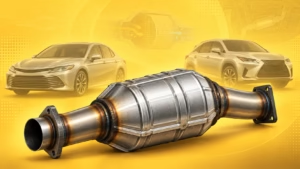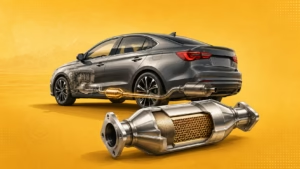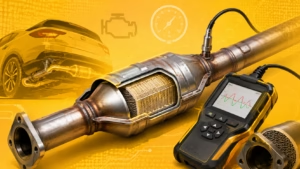
Introduction: A converter rarely clogs for no reason. In most cases, the catalytic converter in a car gets blocked because an engine or fuel-system fault has been feeding it the wrong kind of exhaust for too long. That is why many drivers notice power loss, heat, and warning lights only after the real problem has been active for weeks or months. If you are researching why this happens, it helps to look past the part itself and focus on what came before it.
Key Takeaways
- Most converter clogs start with an upstream engine problem.
- Misfires and rich running are two of the most common causes.
- Oil burning and coolant leaks can contaminate the substrate.
- Overheating can melt the core and restrict exhaust flow.
- Bad fuel can contribute, but it is often not the only issue.
- Fix the root cause before replacing the failed unit.
What usually causes a converter to get clogged?
Most blocked converters are victims, not root causes. The engine, ignition, fuel, or oil-control system usually creates the conditions that slowly ruin the unit.
The most common causes of a clogged catalytic converter are repeated misfires, an overly rich air-fuel mixture, oil burning, coolant contamination, poor fuel quality, and severe overheating. Physical damage can also play a part, but when the internal core melts or plugs up, there is often another fault behind it.
Many drivers search for clogged catalytic converter symptoms first, and that makes sense. However, symptoms only tell you that exhaust flow is restricted. They do not tell you why it happened.
Is the converter usually the cause or the victim of another problem?
Usually, it is the victim. A healthy converter can last a long time if the engine sends it clean, properly burned exhaust.
The unit is designed to treat exhaust gases, not to act like a furnace for unburned fuel or a filter for heavy contamination. When something upstream goes wrong, heat rises fast, the internal honeycomb can coat over or melt, and exhaust flow starts to choke off.
If you want a quick refresher on normal operation, this simple guide to how the converter works helps frame the issue. It is much easier to understand failure once you know what the part is supposed to do in normal conditions.
How does the converter normally process exhaust gases?
It treats hot exhaust as it passes through a coated internal core. When conditions stay within range, gases flow through the honeycomb and harmful compounds are reduced.
That process depends on a stable engine. Qazaqkat also notes that these units contain valuable metals such as platinum, palladium, and rhodium, which is one reason proper recycling matters once a damaged unit is beyond serviceable use.
Can misfires clog a converter?
Yes, very often. Repeated misfires can send raw fuel into the exhaust, which can overheat the converter and damage the internal substrate.
A misfire means one or more cylinders are not burning the air-fuel mix as they should. That unburned fuel does not simply disappear. It moves downstream and can ignite in the exhaust path, creating intense heat where it should not. Once the core overheats, it can deform, crack, or melt enough to restrict flow.
This is not just theory. Manufacturer and regulator documents filed with NHTSA technical bulletin material describe overheating and substrate damage when exhaust conditions fall outside normal limits. That pattern is one reason a misfire should never be ignored, even if the vehicle still drives.
What happens after repeated misfires?
The damage usually builds in stages. At first, the converter runs hotter than normal. Then the core starts to break down, and finally the restriction becomes strong enough to affect performance.
A typical chain looks like this:
- The engine misfires under load, at idle, or during cold start.
- Unburned fuel reaches the hot exhaust.
- The converter temperature spikes.
- The internal honeycomb weakens, melts, or collapses.
- Exhaust flow drops and power falls off.
By the time the driver feels a severe lack of acceleration, the converter may already be badly damaged.
Table: Common upstream faults and the damage they can cause
| Upstream fault | What reaches the exhaust | What can happen inside the converter | Common clue |
|---|---|---|---|
| Ignition misfire | Unburned fuel | Excess heat, melted or collapsed core | Rough running, flashing warning light |
| Rich fuel mixture | Too much fuel and heat | Overheating and carbon loading | Fuel smell, poor fuel economy |
| Oil burning | Oil ash and residue | Contamination of the coated surface | Blue smoke, frequent oil top-up |
| Coolant leak into cylinders | Coolant-related contamination | Coating damage and blockage over time | Coolant loss, white exhaust smoke |
| Poor fuel quality or contamination | Impurities or unstable combustion | Reduced efficiency, extra heat, deposits | Pinging, rough performance |
Can oil burning or coolant contamination block the substrate?
Yes. Both can foul the internal surface and reduce the converter’s ability to process exhaust gases normally.
When an engine burns oil, the exhaust carries residue that should never be there. Over time, those deposits can coat the converter’s active surface and reduce its efficiency. A similar issue can happen when coolant enters the combustion chamber because of an internal engine leak. The result is not always an instant blockage, but it can start a slow decline that ends with restriction and failure.
This is why replacing the unit without checking oil use or coolant loss often leads to repeat failure. The new part faces the same bad conditions as the old one.
Can poor fuel quality or a rich mixture cause clogging?
Yes, both can contribute. A rich-running engine is especially hard on the converter because it raises heat and leaves less room for stable exhaust treatment.
Poor fuel quality is a broad term, so it helps to split it into two ideas. First, contaminated or low-grade fuel can cause poor combustion. Second, even with decent fuel, a fault in sensors, injectors, or fuel control can make the engine run rich. In real repair work, the second case is often more damaging because it persists every time the vehicle runs.
If the mixture stays rich, the converter keeps seeing more fuel and heat than it was built to handle. That can lead to soot buildup, thermal stress, and eventually a plugged or melted core.
What does overheating do inside the converter?
It can warp, melt, or collapse the honeycomb core. Once that core deforms, exhaust flow drops fast.
Overheating is one of the clearest paths from a minor engine issue to a major exhaust restriction. The internal structure needs hot exhaust to work, but there is a limit. Push far beyond that limit and the passages inside the core begin to close. In severe cases, pieces can break loose and shift, creating a hard blockage.
Technical material published through Regulations.gov support documents also discusses heat-related catalyst damage and the engine performance issues that follow. That supports a simple rule: if the unit overheated once, you need to know why before installing another one.
What are the common symptoms once the exhaust flow is restricted?
The most common signs are weak acceleration, poor high-speed power, rising heat, and a feeling that the engine cannot breathe. The worse the restriction gets, the more obvious those signs become.
A clogged catalytic converter can feel like several different faults at once. Some vehicles struggle to rev. Others start normally but fall flat under load. In many cases, the driver notices slow pickup, increased fuel use, or a hot smell after a drive.
If you want a symptom-focused checklist, Qazaqkat also has a guide to early signs your converter is failing. It is a useful next read once you understand the likely causes.
Table: Symptoms, likely meaning, and the first thing to inspect
| Symptom | What it may suggest | Check first | Why it matters |
|---|---|---|---|
| Loss of power under load | Restricted exhaust flow | Misfire codes and exhaust backpressure | Shows whether the blockage is already affecting performance |
| Rough idle plus hot exhaust smell | Misfire or rich running | Spark, coils, injectors, fuel trim data | These faults often trigger overheating |
| Blue smoke from exhaust | Oil burning | Oil level, plugs, engine wear signs | Oil contamination can ruin a replacement unit too |
| Coolant loss with poor running | Internal coolant leak | Cooling system condition and engine leak signs | Coolant contamination can damage the core |
| Weak top speed with no obvious misfire | Advanced blockage | Pressure testing and temperature checks | Confirms whether exhaust flow is severely restricted |
How does a blockage affect engine operation?
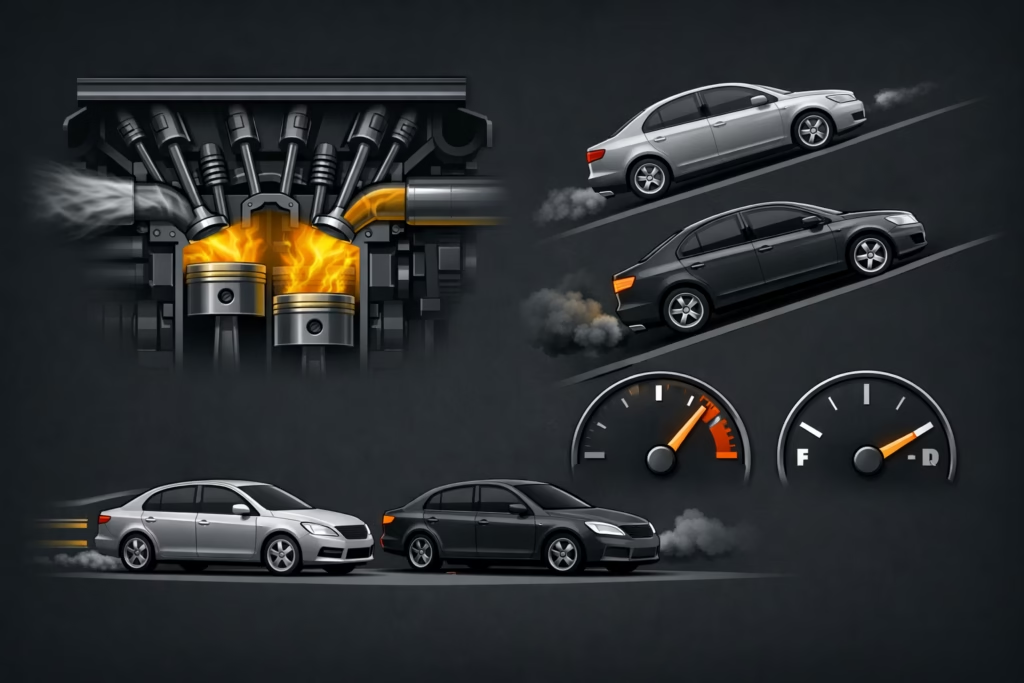
It raises exhaust backpressure and makes it harder for the engine to push gases out. That loss of flow cuts power and can make the whole vehicle feel sluggish.
Understanding how a clogged catalytic converter affects engine operation helps separate it from other faults. When exhaust cannot leave freely, fresh air has a harder time entering the cylinders on the next cycle. The engine then works harder for less output. Drivers often describe it as a car that feels heavy, muted, or strangely flat.
In practical terms, that can lead to:
- Slow acceleration
- Poor response uphill
- Extra engine heat
- Lower fuel economy
- Possible stalling in severe cases
These effects do not prove the converter failed first. They simply show what restriction does once it becomes significant.
How can you tell whether the converter is clogged because of another fault?
You start by looking upstream. Codes, fuel data, oil use, coolant loss, and ignition health usually point to the real cause.
Good diagnosis follows cause before consequence. If the engine has a history of misfire, rich running, or fluid consumption, that matters more than the blocked exhaust alone. A technician will usually compare scan data, inspect ignition parts, review fuel trim, and check for signs that oil or coolant has been entering the cylinders.
What should be checked first?
Start with the fault that could damage the next unit too. That is the fastest way to avoid paying twice.
- Scan for stored and pending trouble codes.
- Check for active misfires, especially under load.
- Review fuel trim and mixture control.
- Look for oil burning signs or unusual oil loss.
- Check for coolant loss or signs of internal leakage.
- Confirm exhaust restriction with proper testing.
If the core is already melted or broken, cleaning is unlikely to solve the real issue. The source of the damage still has to be fixed.
Can you prevent a converter from clogging?
Often, yes. Early repair of engine faults is the best protection.
Small problems become converter failures when they are ignored. A minor misfire today can become a melted core later. The same goes for an injector that leaks, a sensor that skews fuel delivery, or an engine that has started burning oil.
Simple habits help:
- Do not keep driving with a misfire.
- Investigate fuel smell and heavy exhaust heat early.
- Track oil consumption between services.
- Pay attention to unexplained coolant loss.
- Use fuel from reliable sources.
None of these steps are complicated, but they can save the converter from damage that starts elsewhere.
When is repair realistic, and when is replacement or recycling the better call?
Repair makes sense when the root cause is upstream and the converter has not suffered major internal damage. Once the core is melted, collapsed, or badly contaminated, replacement or recycling is often the practical route.
The key point is simple: fix the engine fault first. After that, assess the condition of the unit honestly. If the internal structure is already destroyed, keeping it in service will only hold the vehicle back. For unusable parts, Qazaqkat offers transparent assessment and responsible handling of the catalytic converter through its purchasing and recycling service in Kazakhstan.
Summary
A converter gets clogged because something upstream has been feeding it bad exhaust conditions for too long. Misfires, rich running, oil burning, coolant contamination, poor fuel quality, and overheating are the main triggers, and the part itself is often the victim rather than the original fault. That is why diagnosis should start with engine health, not just the blocked exhaust. If a unit is already beyond saving, Qazaqkat can help with fair evaluation, responsible recycling, and a clear process for damaged automotive converters across Kazakhstan.
FAQ
Can a converter unclog itself after a long drive?
Usually not if the core is melted, collapsed, or heavily contaminated. A long drive may change symptoms for a short time, but it will not reverse serious internal damage.
Will fuel additives fix a blocked unit?
They rarely fix a true blockage. If the unit is restricted because of melted substrate or heavy contamination, the real fix is to correct the root cause and then assess whether the part is still serviceable.
Can I keep driving with a restricted converter?
You can sometimes drive for a while, but it is a bad idea. Power loss can get worse, heat can rise, and the upstream engine problem may continue damaging other parts.
Is a misfire always the reason a converter fails?
No. Misfires are common, but rich running, oil burning, coolant leaks, contamination, and overheating can also lead to failure. The exact cause needs diagnosis, not guesswork.
Why should the engine be repaired before a replacement unit is fitted?
Because the new unit can fail the same way as the old one if the upstream fault remains. Fixing the engine problem first gives the replacement a normal operating environment.