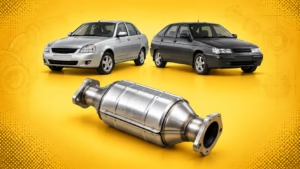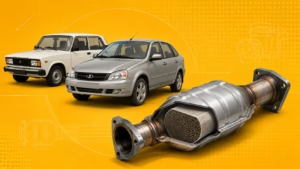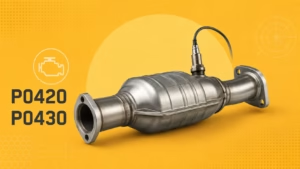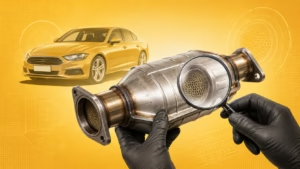
Introduction: Selling a used converter should not feel like guesswork. During catalytic converter acceptance, QazaqKat checks the unit, confirms its identity, reviews its condition, and selects a suitable evaluation method. These steps help the team make a clear offer based on the converter itself rather than a rough estimate. Sellers can ask questions, provide photos, and learn what affects the result before they agree to sell.
Key Takeaways
- Initial photos and markings help identify the converter.
- Visual inspection reveals damage, cuts, and missing material.
- Part numbers can connect a unit to its original type.
- Catalog data helps, but physical condition still matters.
- Sampling may be needed for loose or mixed material.
- Instrument testing can improve confidence in the result.
- A documented process supports a clear and fair final offer.
What happens after a seller contacts QazaqKat?
The process begins with basic information about the converter and its condition. Clear photos, visible markings, vehicle details, and the seller’s location can make the first review faster.
A private owner may have one removed unit from a personal car. A repair workshop may have several converters from different vehicles. Dismantling yards and industrial partners may present larger or mixed batches. Each case needs a suitable level of review.
For an initial inquiry, it helps to provide:
- Photos of the full metal housing from several sides
- A close photo of any stamped code, label, or part number
- The vehicle make, model, year, and engine type, if known
- Details about cuts, dents, cracks, or missing sections
- The number of units or the approximate size of a batch
- Information about whether the inner material remains intact
This early information does not always produce a final offer. It helps QazaqKat decide what must be checked next. A clear code may allow quick identification, while a damaged or unmarked unit may need closer physical review.
Can a seller receive an offer from photos alone?
Photos can support an initial estimate, but they may not show every factor that affects the final result. The actual unit may still need inspection before the offer is confirmed.
Lighting, dirt, rust, and camera angle can hide markings. A housing may look complete even when some inner material has broken away. For that reason, sellers should treat a photo-based figure as an early guide unless QazaqKat confirms otherwise.
Good photos reduce delays. Place the unit in clear light, avoid filters, and include both close and wide views. Do not clean away stamped markings with harsh tools, as this may make identification harder.
How does visual inspection help grade a converter?
Visual inspection shows whether the converter is complete, altered, damaged, or contaminated. It also gives the evaluator clues about the unit’s construction and likely grading path.
The outer shell can reveal cut points, welding, deep dents, corrosion, and signs of prior opening. The inlet and outlet may show whether the unit came from an original exhaust assembly or has been modified. If the inner core is visible, the evaluator can check whether it appears present and how well it has held together.
A damaged shell does not always mean that the unit has no recoverable value. The key question is what material remains and whether it can be identified and assessed with confidence. Sellers with cut or broken units can read more about selling removed or damaged converters.
What does QazaqKat check during the first physical review?
The team checks identity clues, completeness, housing condition, and the state of the inner material. These findings guide the next evaluation step.
What the first inspection can reveal?
| Inspection point | What the evaluator looks for | Why it matters |
|---|---|---|
| Stamped markings | Readable codes, symbols, and production marks | They may help match the unit to known reference data |
| Metal housing | Cuts, dents, corrosion, welds, and missing sections | Damage can affect identification and material retention |
| Inner core | Presence, breakage, loss, or visible contamination | The remaining recoverable material affects evaluation |
| Inlet and outlet | Shape, pipe size, and signs of alteration | These details can support type identification |
| Batch consistency | Whether units match or vary in type and condition | Mixed batches may need sorting before assessment |
Inspection is not just a search for flaws. It prevents unlike units from being treated as if they were equal. Two shells with a similar size can have different origins, inner structures, and material content. Careful grading keeps those differences visible.
How are markings and part numbers used?
Markings help connect a physical unit with known vehicle or manufacturer information. A readable identifier can make classification faster and reduce uncertainty.
Converters may carry stamped letters, numbers, logos, or other production marks. The evaluator compares these details with the shape and construction of the unit. One clue alone may not be enough, so the full physical profile still matters.
A catalytic converter catalog can organize reference information for known units. It may help distinguish units that look alike from the outside. However, a catalog entry does not replace inspection because the presented converter may be damaged, incomplete, modified, or incorrectly identified by the seller.
Traceable markings also matter in wider automotive practice. A legal interpretation from the US National Highway Traffic Safety Administration discusses identification and marking in the context of replacement catalytic converters. Kazakhstan has its own operating and legal setting, but the source shows why clear product identity can support accountable handling.
What if the code is missing or unreadable?
An unreadable code does not automatically stop the review. QazaqKat can consider the housing, dimensions, construction, visible core, vehicle information, and other available evidence.
Unmarked material often needs more care because the evaluator cannot rely on a quick reference match. If several possible identities remain, further sorting or testing may give a more reliable basis for the offer.
Sellers should not add a code based only on an online photo or a similar-looking shell. A wrong identity can delay the review. It is better to state that the code is absent and provide honest details about the unit’s origin.
Why does the inner core affect the evaluation?
The inner core carries the material that makes recovery possible. Its type, condition, quantity, and consistency are therefore central to professional grading.
Automotive converters can contain platinum, palladium, and rhodium. These precious metals support the converter’s emissions-control function and can return to the supply chain after responsible processing. A useful overview of platinum, palladium, and rhodium inside converters explains their role in more detail.
The evaluator also checks whether the core remains whole or has turned into loose pieces and dust. Material loss can occur when a unit breaks, receives an impact, or gets opened without proper handling. Contamination with soil, steel fragments, insulation, or unrelated ceramic can make a sample less representative.
Are ceramic and metal cores assessed in the same way?
No. Different core types may require different handling, sorting, and assessment methods.
A ceramic structure can break into blocks, fragments, or powder. A metal structure has a different form and must not be graded as if it were ceramic. Separating these materials helps the evaluator avoid broad assumptions and choose a method suited to the presented unit.
Vehicle-specific technical procedures also show why converter systems should not be treated as identical. A manufacturer bulletin available through the NHTSA technical bulletin archive provides an example of model-specific technical guidance. For sellers, the practical lesson is simple: the vehicle source and part identity can matter during review.
When does QazaqKat use sampling or instrument analysis?
Sampling becomes useful when catalog identification cannot give enough confidence, especially for loose, mixed, processed, or unclear material. The goal is to obtain a representative view rather than test an unusual fragment.
A sample must reflect the material offered. If a batch contains several grades, taking material from only one point can distort the result. Sorting may come first. The evaluator can then decide whether each group should be reviewed separately.
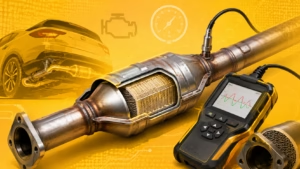
A spectrometer for catalytic converters can support material analysis when instrument-based assessment is suitable. The reading is only as useful as the sample, however. Clean preparation and representative selection remain important because a small test portion should reflect the larger lot.
This is one reason a professional purchase of catalytic converter service does more than weigh a shell. QazaqKat combines identification, inspection, grading, and suitable testing logic to build a clearer basis for the offer.
How does the evaluation method change by material type?
Complete identified units may rely more on reference data and condition checks, while loose or mixed material may need sorting and sampling. The chosen path should match what the seller actually presents.
Which evaluation route fits each type of material?
| Material presented | Likely first step | Possible further review |
|---|---|---|
| Complete unit with a clear code | Code and construction check | Condition confirmation against reference information |
| Complete unit without a readable code | Visual identification and physical grading | Further comparison or analysis if identity remains unclear |
| Cut or damaged unit | Check remaining shell and inner material | Separate assessment based on completeness and condition |
| Loose ceramic material | Review source, cleanliness, and consistency | Representative sampling and suitable analysis |
| Mixed batch | Sort by type, code, and condition | Evaluate each group through the fitting method |
The table describes the logic behind the process, not a fixed promise for every lot. QazaqKat can explain which route applies after seeing the material and the information supplied by the seller.
Why can two similar-looking units receive different offers?
External size does not prove that two units contain the same core or recoverable material. Identity, construction, completeness, and condition can all lead to a different result.
One converter may retain its full inner core, while another has lost fragments. One may have a clear original identifier, while the other cannot be matched with confidence. Units from different engines or production periods may also look similar even though they are not the same component.
A trustworthy review avoids giving every unit of a certain size one generic value. It also avoids judging only by total weight. The steel shell, attached pipe, internal core, and contamination do not play the same role in the recovery process.
Does a heavier converter always have more value?
No. Total weight alone cannot show the identity, state, or recoverable content of a converter.
Extra pipe, a thick housing, trapped debris, or unrelated metal can increase weight without improving the recoverable material. The evaluator must look at what makes up that weight. This protects both the seller and the recycling process from a misleading comparison.
How can sellers prepare for a clear evaluation?
Sellers should gather accurate information, keep units separated, and avoid losing inner material. Simple preparation can reduce uncertainty and make communication easier.
-
✓Keep coded units separate Store identifiable converters apart from loose material.
-
✓Protect markings Photograph stamped codes before transport or handling.
-
✓Collect loose material cleanly Use a clean container and keep out dirt or metal scrap.
-
✓Note visible damage Mention cuts, cracks, impact damage, or missing sections.
-
✓Sort mixed batches first Group complete units, damaged shells, metal cores, and loose ceramic separately.
-
×Do not mix unknown fragments Mixed material makes representative review harder.
-
×Do not scrub off codes Harsh cleaning can remove the identity clues needed for grading.
-
×Do not add guessed labels Only use known source details, not lookalike matches from online photos.
-
×Do not leave loose material exposed Open handling increases the risk of contamination and loss.
-
×Do not deliver one unsorted pile Separated groups are faster to explain and easier to assess fairly.
- Keep identifiable units separate. Do not mix coded converters with loose ceramic or unknown fragments.
- Photograph markings before transport. Codes may become harder to read after handling.
- Collect loose material carefully. Use a clean container and avoid mixing it with dirt or metal waste.
- State known damage. Tell the evaluator if the unit has been cut, opened, dropped, or partly emptied.
- Share vehicle details when available. Make, model, engine, and year can support identification.
- Ask how the figure was reached. A clear explanation should cover identity, grade, condition, and any testing used.
- Review the final terms. Confirm the offer before completing the sale.
Workshops and dismantling yards can also label stored units by source vehicle or intake date. This simple record helps prevent mix-ups. For larger batches, separating complete units, damaged shells, metal cores, and loose ceramic before the review can save time.
What happens after the seller accepts the offer?
After agreement, the converter enters a responsible recovery route. Valuable secondary raw materials can be recovered and returned to the wider supply chain.
People often ask what is done with catalytic converters once a buyer receives them. The broad purpose is to process the material safely, recover useful precious metals, and reduce the need to treat the old unit as waste. QazaqKat supports this circular approach through responsible handling and professional recycling services.
Proper catalytic converter recycling also helps keep converter material out of unsuitable disposal routes. It supports resource recovery and reduces the risk of environmental contamination. For vehicle owners and automotive firms, selling through a professional channel connects a financial transaction with responsible material management.
How can a seller discuss a batch with QazaqKat?
Sellers can contact the company by phone or email and describe the units they have. Photos, codes, quantities, and condition notes help the team prepare for the review.
QazaqKat can be reached at +7 708 838 63 26 or +7 707 470 85 33. Pricing inquiries, service questions, and partnership requests can also be sent to info@qazaqkat.kz. The office is at 9 Kendala Street, Astana 010006, Kazakhstan, while the company serves clients across Kazakhstan.
Summary
QazaqKat evaluates converters through a clear sequence: initial information, visual inspection, identification, grading, and suitable testing when needed. Codes and catalog references can speed up the review, but the physical unit always matters. Damage, missing core material, contamination, and mixed batches may change the required method.
A professional assessment gives the seller a stronger basis for judging the final catalytic converter price. QazaqKat supports private owners, dealerships, workshops, dismantling yards, and industrial partners with clear communication, responsible handling, and practical guidance from the first inquiry through the final offer.
FAQ
Do I need to know the part number before contacting QazaqKat?
No. A part number helps, but it is not required for the first inquiry. Send clear photos of the complete housing, visible markings, and any known vehicle details. The team can then explain what further review may be needed.
Can QazaqKat evaluate a cut or damaged converter?
Yes, damaged units can still be reviewed. The result depends on what remains, whether the inner material is present, and how confidently the unit or material can be identified.
Why might an initial estimate change after inspection?
Photos may not reveal missing core material, contamination, hidden cuts, unreadable markings, or prior alterations. A physical check provides more complete information and may therefore change the initial estimate.
Does every converter need instrument testing?
No. A complete unit with clear identification may follow a reference-based review with a condition check. Loose, mixed, or unclear material is more likely to require sampling or further analysis.
What should a workshop do with a mixed batch?
Separate units by visible code, core type, and condition where possible. Keep loose material in clean containers, record known source vehicles, and provide photos before delivery. Better sorting makes the review easier to explain and helps reduce uncertainty.