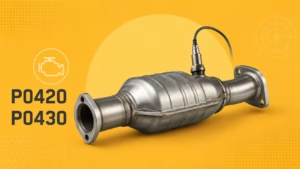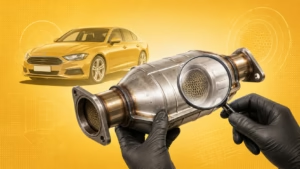
Introduction: The catalytic converter in a car can last for years, but real life is rarely gentle. In Kazakhstan, cold starts, mixed fuel quality, rough roads, traffic, and delayed engine repairs can all shorten its working life. If you want to know what wears this part out, what symptoms matter, and how wear can affect both driving and resale, this guide breaks it down in clear, practical terms.
Key Takeaways
- Converter wear depends more on engine health than age alone.
- Short trips and long idle periods can slow warm-up and add stress.
- Misfires, oil burning, and coolant leaks can damage the core fast.
- Overheating and clogging often show up as power loss and fault lights.
- There is no single mileage rule for every vehicle or driving pattern.
- Condition affects both performance and recycling value.
What affects converter life the most?
The biggest factors are engine condition, fuel quality, heat, and driving pattern. Age matters, but a healthy engine can keep the unit working much longer than a neglected one.
Many drivers look for one simple number, but that rarely helps. The real catalytic converter service life depends on how cleanly the engine burns fuel, how often the car reaches full operating heat, and whether contamination gets into the exhaust.
A converter works in a harsh place. It sits in the exhaust stream, handles very high heat, and treats harmful gases before they leave the tailpipe. If the engine runs rich, misfires, burns oil, or leaks coolant, the material inside can become coated, overheated, or even melt. That damage is often much more serious than normal aging.
Road conditions also matter. A hard hit from a curb, ice chunk, or poor road surface can crack the shell or damage the ceramic core inside. Once the core breaks, pieces may rattle, block exhaust flow, and cause a steady drop in performance.
That is why the real catalytic converter lifespan can vary a lot from one vehicle to another, even when both cars have similar mileage.
Does fuel quality matter?
Yes. Poor fuel quality or contaminated fuel can speed up wear, especially when it comes with other engine issues.
If combustion is not stable, the exhaust stream becomes less predictable. That means more unburned fuel can reach the converter. Over time, repeated exposure to that kind of exhaust can overheat the core or reduce its efficiency.
For drivers in Kazakhstan, fuel quality can vary by region, season, and supplier. That does not mean every issue starts at the pump, but it does mean bad fuel should stay on the checklist when symptoms appear after refueling or during a period of rough running.
Can engine problems ruin it faster?
Yes. Engine faults are one of the fastest ways to damage the unit.
Misfires send unburned fuel into the exhaust. Oil consumption leaves ash and residue. Coolant leaks can contaminate the internal surface. Each of these problems can reduce efficiency, block flow, or cause heat damage. In many cases, the converter is not the first part to fail. It becomes the next victim after an earlier engine issue goes unresolved.
Table: Wear factors, likely damage, and common symptoms
| Wear factor | What it can do inside the converter | What the driver may notice |
|---|---|---|
| Frequent misfires | Overheats the core and can melt internal material | Check engine light, loss of power, hot exhaust smell |
| Oil burning | Coats active surfaces with ash and residue | Slower response, lower efficiency, rising emissions faults |
| Coolant entering cylinders | Contaminates the inner coating and reduces activity | Persistent fault codes, rough running history |
| Short trips only | Keeps the unit cooler for longer periods | Weak efficiency on repeated cold starts |
| Road impact | Cracks shell or breaks ceramic core | Rattle under the car, blocked exhaust, harsh noise |
| Rich fuel mixture | Adds extra heat and stress | Poor fuel economy, sulfur smell, sluggish acceleration |
How do driving habits in Kazakhstan change wear?
Driving habits matter a lot. Short urban trips, winter warm-ups, stop-start traffic, and delayed maintenance can all shorten working life.
The unit needs heat to work well. The phrase catalytic converter operating temperature matters because this part only becomes highly effective after the exhaust gets hot enough. If most trips are short, the car may spend too much time warming up and not enough time in stable, efficient running.
Cold winters make this more obvious. Many drivers let the engine idle before moving off, especially during severe weather. Some warm-up time may feel necessary for comfort and visibility, but long periods of idling are not ideal. According to the U.S. Department of Energy, unnecessary idling wastes fuel. From a wear point of view, lots of idle time and very short trips can also mean the exhaust system spends more time below full working heat.
On the other hand, regular highway driving can help the system reach a more stable temperature. That does not make highway use risk-free, though. If the engine already has a misfire or fuel system fault, longer runs can push excess heat through the exhaust for a longer period, and that can damage the core.
Are short trips worse than highway driving?
Usually, yes. Short trips often create harder conditions because the system heats up and cools down again and again.
Repeated cold starts add moisture and incomplete combustion byproducts to the exhaust path. If the car is mostly used for quick runs across town, the converter may never spend enough time in its ideal working range. That can reduce efficiency over time, especially when paired with poor tune-up habits.
Can overheating happen in city traffic or on the open road?
Yes. Overheating comes from the fault, not just the road type.
People often blame speed or distance alone, but overheating usually traces back to rich running, misfires, or unburned fuel reaching the exhaust. That can happen in traffic, during towing, or on a longer trip. The key point is simple: the converter is built for heat, but not for uncontrolled heat caused by engine trouble.
If a workshop has already removed a failed car catalytic converter, a careful inspection and proper recycling route matter just as much as the repair itself. The cause of failure should be confirmed before another unit goes in.
What are the common signs that wear has started?
The first signs are usually performance changes, warning lights, odd smells, or unusual sounds. Wear does not always appear suddenly.
Many cases start with a subtle drop in power. The car may feel slower to rev, less willing to accelerate, or heavier on hills. Fuel use may creep up. Some drivers notice a sulfur-like smell. Others hear a metallic rattle under the floor if the ceramic core has cracked.
A fault light can appear before the driver feels a major power loss. That is why it helps to compare symptoms early. Qazaqkat’s guide to early signs your converter is failing is useful if you want a simple list of warning signals before the problem gets worse.
Another clue is heat. If the area under the vehicle seems unusually hot after a drive, or if the exhaust note changes and feels restricted, the system needs attention. Clogging can build slowly, then become obvious all at once.
Can performance drop before the unit is fully blocked?
Yes. Efficiency can fall long before total blockage happens.
The internal coating may lose activity. Small cracks can reduce flow quality. A partial blockage can make the engine work harder without creating a complete no-drive condition. That is why some drivers ignore the early signs for too long. The car still moves, so they wait. In reality, the problem often keeps growing.
Does a rattle always mean the core is broken?
Often, but not always. A rattle is a strong warning sign that needs a check.
Loose heat shields can also make noise, so diagnosis matters. Still, a rattle from inside the shell can mean the ceramic material has cracked into pieces. If that happens, the pieces may shift, clog the outlet, and create unpredictable power loss.
How does wear affect performance and resale value?
Wear affects both how the vehicle drives and how buyers or recyclers assess it. A weak or damaged unit can lower confidence in the whole car.
From the driver’s side, a worn converter can reduce exhaust flow, increase heat, trigger warnings, and weaken response. Even if the car still starts and runs, buyers may treat emissions faults as a sign of bigger maintenance issues.
From the recycling side, age alone does not decide value. Model, internal metal content, completeness, and physical condition all matter. Qazaqkat’s article on why some converters cost more than others explains why two removed units can be assessed very differently even when they look similar from the outside.
This matters for owners who are planning a repair, a sale, or a trade-in. A converter that is intact but worn may still have recycling value. A badly broken one may be harder to evaluate, especially if material is missing or the shell has been cut poorly.
Table: How converter condition can affect performance and recycling assessment
| Condition | Likely effect on driving | Likely effect on assessment |
|---|---|---|
| Normal aging with no major blockage | Minor efficiency loss, possible fault codes | Condition still matters, but identification is usually easier |
| Partially clogged core | Reduced power, sluggish acceleration, extra heat | Physical condition may still allow clear evaluation |
| Melted internal material | Serious restriction, heat stress, poor running | Damage can lower confidence in completeness and condition |
| Cracked or rattling core | Noise, unstable flow, possible blockage | Broken state may affect how the unit is handled and checked |
| Impact-damaged shell | Possible leaks or internal breakage | Visible damage often changes inspection outcome |
| Removed cleanly and identified | No driving effect because it is off the car | Usually simpler to inspect for recycling purposes |
When should you test it, replace it, or recycle it?
You should test it when symptoms appear, replace it when damage or failure is confirmed, and recycle it when it has been removed and cannot serve safely anymore. The key is not to guess.
Many owners search for when to replace a catalytic converter, but replacement should follow diagnosis, not panic. If the engine is misfiring, burning oil, or running rich, that root cause must be fixed first. Otherwise, a new unit can fail the same way.
According to the US EPA, vehicle emission-control systems help reduce harmful air pollution. That is a practical reason not to ignore converter faults. A failing unit is not just a repair issue. It can affect emissions, fuel use, and the long-term health of nearby exhaust parts.
Testing is usually the right next step when you have repeated fault codes, a clear rattle, strong heat buildup, or a major loss of power. Replacement becomes more likely if the core has melted, broken, or become badly contaminated. Recycling becomes the logical step when the removed part is no longer fit for service.
Should you keep driving with a suspected fault?
Usually not for long. Continued driving can turn a mild problem into a costly one.
If the unit is clogging, exhaust backpressure can rise and the engine can suffer. If the engine is misfiring and sending fuel into the exhaust, heat damage can become severe. A short trip to a repair point may be unavoidable, but repeated use without diagnosis is a poor bet.
What should you check before replacement?
Check the cause first. Replacing the part without fixing the engine problem is risky.
Confirm whether the issue came from misfires, oil burning, coolant contamination, impact damage, or long-term clogging. Also confirm that the noise is really from the converter and not a loose shield or nearby exhaust part. This step often saves money and prevents a repeat failure.
For a complete overview of this topic, read Catalytic Converter Basics for Kazakhstan Drivers.
Summary
Converter wear is rarely about age alone. In real Kazakhstan driving, fuel quality, cold starts, idling, short trips, road impacts, and unresolved engine faults all play a role. Some units age slowly and quietly. Others fail early because the engine has been sending them the wrong exhaust for too long.
If you notice weak acceleration, rattling, heat, or recurring fault codes, get the cause checked before you agree to replacement. That protects the next unit and helps you make a smarter repair decision. If the removed catalytic converter is no longer usable, Qazaqkat provides transparent evaluation and responsible recycling in Kazakhstan.
For owners, workshops, and fleets, that practical approach matters. Diagnose early, fix the source problem, and treat recycling as the final step when the part has reached the end of its useful life.
FAQ
Is there a fixed mileage or year limit for this part?
No. Its working life depends on engine health, fuel quality, driving pattern, and physical condition more than a single mileage figure.
Can bad fuel cause sudden failure?
It can contribute, especially if the engine already has ignition or mixture issues. In many cases, bad fuel is one factor inside a larger chain of problems.
Does winter idling help or hurt long-term condition?
Very long idling is not ideal. It wastes fuel and can keep the exhaust system below steady working heat for too long, especially when trips are short.
Can the unit recover after an engine repair?
Sometimes performance improves if the issue was mild and the core is still intact. If the inside has melted, cracked, or been heavily contaminated, repair of the engine alone will not restore the converter.
Can a removed damaged unit still be recycled?
Yes, often it can. Assessment depends on identification, completeness, and condition, which is why professional inspection is important after removal.