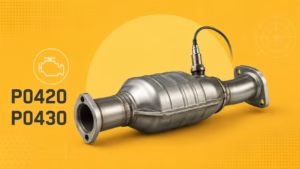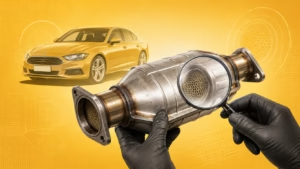
Introduction: Many drivers know the exhaust system gets hot and noisy, but fewer know what happens inside the unit that cleans those gases before they leave the tailpipe. This guide explains how the converter works from the inside out, with plain language and practical detail. If you later need help with a removed catalytic converter, QazaqKat handles professional purchasing and recycling across Kazakhstan with a clear, transparent process.
Key Takeaways
- The converter uses a honeycomb core to create a huge active surface area.
- A thin coating holds precious metals that speed up chemical reactions.
- Heat matters because the reactions work far better once the unit is hot.
- Gas flow must stay smooth, or performance drops and backpressure can rise.
- The main job is to cut carbon monoxide, hydrocarbons, and nitrogen oxides.
- Core type, metal content, and condition all affect recycling value.
What does a converter do inside a car?
Its job is simple: it helps turn harmful exhaust gases into less harmful ones before they leave the vehicle. That happens through fast chemical reactions on a coated internal surface.
When fuel burns in an engine, the exhaust does not come out perfectly clean. According to the US EPA, vehicle emissions that contribute to smog include hydrocarbons and nitrogen oxides. A converter is part of the emissions system that helps reduce those pollutants, along with carbon monoxide.
If you want a broader car-level view, this guide on purpose and maintenance of the converter in a car explains how the part fits into everyday vehicle operation.
What sits inside the converter?
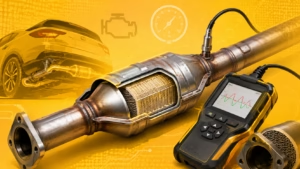
Inside, you usually find a shell, a substrate with many tiny channels, a coating layer, and precious metals on that coating. Each part has a clear role.
People often ask what a catalytic converter is made of. The short answer is that the outer shell is metal, while the active core is usually a ceramic or metallic honeycomb coated with special materials. That structure gives exhaust gas lots of surface to touch without blocking normal flow.
Another common question is what a catalytic converter in a car is made of. In most cases, the key active metals are platinum, palladium, and rhodium. QazaqKat explains their role in this article about the metals found inside a converter, which is also useful if you want to understand why some units carry more recovery value than others.
When people picture inside the catalytic converter, they often imagine a single solid block. In reality, the core is full of small passages. Exhaust passes through those passages, and the coating on the walls helps the gas react as it moves along.
Table: Parts found inside a converter and what each one does
| Part | What it does | Why it matters |
|---|---|---|
| Outer shell | Holds the core and protects it from road use and heat | Keeps the unit physically intact |
| Substrate | Provides a honeycomb path for exhaust gas | Creates a large contact area with low restriction |
| Washcoat | Adds a rough, high-area layer over the substrate | Gives the active metals more working surface |
| Precious metals | Speed up oxidation and reduction reactions | Make emissions treatment possible at exhaust temperatures |
| Mat or support layer | Helps hold the core in place inside the shell | Protects the substrate from shock and vibration |
Why does the substrate look like a honeycomb?
Because the honeycomb shape gives the gas a very large surface to touch while still letting it move through the exhaust system. That balance is one of the smart parts of the design.
The core is packed with narrow channels. A smooth, open path helps exhaust move with limited resistance. At the same time, the many channel walls create a broad active area for the coating and metals.
This is the heart of catalytic converter construction. The unit must treat gas quickly, survive vibration and heat, and avoid acting like a plug in the exhaust. A plain empty tube would let gas pass, but it would not provide enough active area. A solid block would provide area, but gas could not move through it. The honeycomb shape solves both problems at once.
Britannica describes the converter as an emissions-control device that uses a honeycomb support coated with catalyst materials. That simple design choice explains why the part can be compact yet effective in normal road use.
What is the coating made of?
The coating is usually a high-surface layer that carries tiny amounts of precious metals. Those metals do not get “used up” like fuel. Instead, they help reactions happen faster.
The coated layer is often called a washcoat. Its job is to create even more usable surface on top of the substrate. Once that layer is in place, precious metals are added. The result is a very active surface where hot exhaust gases can react.
That explains why the phrase catalytic converter is more than just a label for one metal can under the car. The real work happens on the coated surfaces inside the core, where chemistry and heat meet flowing gas.
From a recycling point of view, this coating matters a lot. The precious metals are the reason removed units are professionally evaluated rather than treated as ordinary scrap. Their exact amount can vary by design, vehicle type, and age, which is why careful inspection is so important.
How do gases move through the converter?
They enter one end, pass through the tiny channels in the core, touch the coated walls, and leave after part of the exhaust has been chemically treated. The flow is continuous and very fast.
The converter sits in the exhaust line, so it sees a steady stream of hot gas from the engine. As that gas moves through the honeycomb channels, harmful compounds come into contact with the active coating. The longer and cleaner that contact is, the better the treatment works.
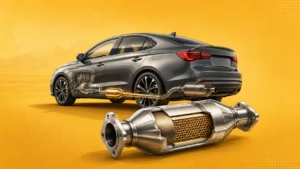
Placement also matters. This guide on where the converter is located in the car shows why it is installed in the exhaust path where it can heat up quickly after startup.
If the core becomes blocked, melted, or heavily contaminated, gas flow suffers. Then the unit may create more backpressure, reduce engine response, and clean emissions less effectively. That is one reason physical condition matters both for vehicle performance and for recycling assessment.
Why does heat matter so much?
Because the reactions work far better when the converter reaches operating temperature. A cold unit can still pass gas, but it will not clean that gas as well.
Exhaust treatment is tied to temperature. Soon after startup, the unit begins warming up. As heat builds, the active metals can do their job more effectively. This is why converter placement in the exhaust path is so important and why short trips can be harder on emissions systems than longer drives.
Heat also explains some common failure modes. Too much heat from engine problems or unburned fuel can damage the core. Too little heat, repeated contamination, or poor combustion can also reduce efficiency over time. In plain terms, the converter needs the right operating range: hot enough to work well, but not so hot that the substrate or coating breaks down.
How are harmful emissions treated?
Three main things happen: carbon monoxide is oxidized, unburned hydrocarbons are oxidized, and nitrogen oxides are reduced. Those reactions turn more harmful exhaust components into less harmful outputs.
As Britannica explains, converters reduce pollution by promoting chemical reactions on catalyst-coated surfaces. In simple terms, the active metals help change the exhaust chemistry without being consumed like fuel.
For drivers, the big idea is easy to remember. Hot exhaust enters with harmful gases. The gas touches the coated channel walls. Reactions happen. Cleaner gas leaves the other side.
Table: Main exhaust gases and how the converter handles them
| Exhaust component | Main reaction | Less harmful result |
|---|---|---|
| Carbon monoxide | Oxidation | Carbon dioxide |
| Unburned hydrocarbons | Oxidation | Carbon dioxide and water |
| Nitrogen oxides | Reduction | Nitrogen and oxygen-related products |
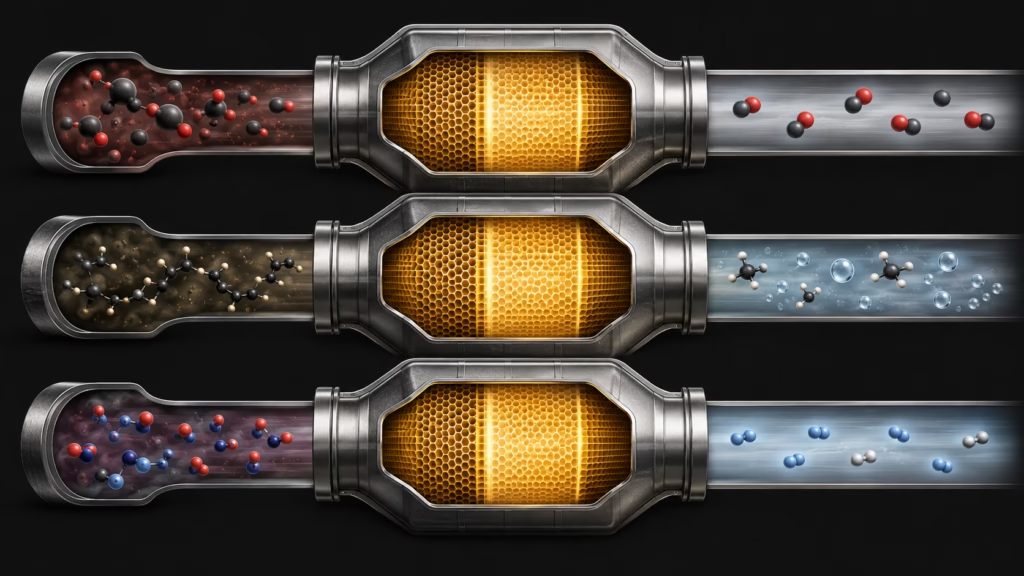
This is why the internal surface area matters so much. The more useful coated area the gas can touch, the more chances those reactions have to happen during the short time the exhaust is moving through the unit.
What happens if the core cracks, melts, or clogs?
The unit may clean less effectively, restrict exhaust flow, or both. In severe cases, pieces of the core can break apart and cause major flow problems.
A healthy core keeps its shape and channel structure. When that structure breaks, gas no longer moves through the passages the way it should. Cracks can reduce contact quality. Melting can narrow or close channels. Heavy deposits can coat active surfaces and lower chemical performance.
Drivers may notice weak acceleration, extra heat, strange exhaust sounds, or warning signs tied to emissions performance. However, the internal problem is not always visible from the outside. A metal shell can look fine even when the core inside is damaged.
That matters during inspection. Buyers and recyclers need to know whether the unit is complete, whether the core is present, and whether the internal material looks original. Those checks help separate a reusable or valuable unit from one that is empty, altered, or badly damaged.
Why does the inside matter when a unit is recycled?
Because the recoverable value is tied to the core, the coating, and the precious metals within it. The shell alone is not the main story.
When a removed unit reaches a professional buyer, the internal design helps explain its worth. Core type, visible condition, and expected metal-bearing material all influence evaluation. That is why trained assessment matters, especially when units look similar from the outside but differ a lot on the inside.
One useful way to think about it is this: whether a catalytic converter is intact, original, partially broken, or heavily worn can change how it is handled during purchasing and responsible recycling.
For owners, workshops, and dismantlers, that means careful handling pays off. Avoid breaking the core, mixing units without identification, or storing them carelessly. Good handling preserves condition, supports more accurate evaluation, and helps keep the recycling chain transparent.
What should drivers remember about normal operation?
The converter works quietly in the background, but it depends on good engine health, proper heat, and smooth gas flow. If any of those are off, performance can drop.
Most drivers never see the inside of the unit, yet its design affects everyday use. A healthy converter supports cleaner exhaust. A damaged one can hurt engine feel and emissions performance. That is why it makes sense to pay attention to warning signs, poor running, or repeated exhaust issues instead of ignoring them.
It also helps to remember that the converter is a chemical reactor, not just a muffler-like can. The shell, substrate, washcoat, metals, temperature, and gas movement all work together. If one part of that chain fails, the whole system suffers.
For a complete overview of this topic, read Catalytic Converter Basics for Kazakhstan Drivers.
Summary
The inside of a converter is clever but not mysterious. A metal shell holds a honeycomb core. That core carries a rough coating. The coating holds precious metals. Hot exhaust flows through tiny channels, touches those active surfaces, and harmful gases are treated on the way out. Heat, surface area, and steady gas flow are the keys that make it work.
For recycling, those same internal features explain why proper evaluation matters. QazaqKat focuses on transparent purchasing and responsible processing in Kazakhstan, helping private owners and business clients handle removed units in a safe, clear, and environmentally sound way.
FAQ
Is the core always ceramic?
No. Many units use ceramic honeycomb cores, but some use metallic substrates. Both aim to provide a large active surface area while allowing exhaust gas to pass through.
Why are platinum, palladium, and rhodium used?
They help speed up the key reactions that reduce harmful exhaust gases. Their presence is also one reason removed units are professionally inspected during recycling.
Can a converter work when the engine is cold?
Yes, exhaust can still pass through it, but cleaning efficiency is lower before the unit reaches normal operating temperature. Heat is a major part of how the chemistry works.
Does a damaged shell always mean the inside is bad?
Not always. A dented shell may still contain an intact core, while a normal-looking shell can hide internal damage. That is why visual checks alone do not tell the full story.
Why do two converters that look alike have different value?
Because internal design, metal-bearing material, condition, and originality can differ a lot. The outside can look similar even when the inside is not.