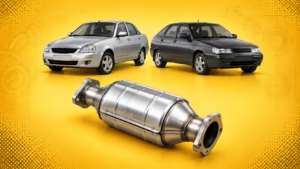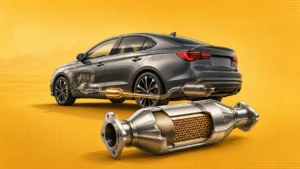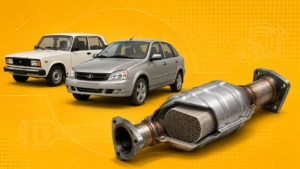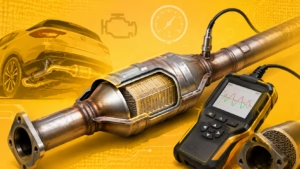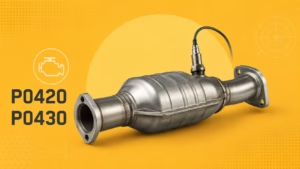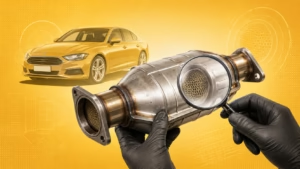
Introduction: A Lada Priora and VAZ 2170 often refer to the same model family, but that does not mean every exhaust unit will fit every car. The VAZ 2112 can differ even more due to its engine, production year, exhaust layout, sensor positions, and emissions setup. Before buying a replacement or asking about a used unit, identify the part from the vehicle and the converter itself. A reliable catalytic converter price should reflect the exact unit rather than a broad model name.
Key Takeaways
- Priora and 2170 searches often refer to the same vehicle family.
- A 2112 unit may differ by engine, year, sensors, pipes, and flanges.
- Use the VIN, markings, photos, and measurements to confirm the part.
- Warning lights and power loss do not prove that the converter has failed.
- Factory, aftermarket, and universal units serve different needs.
- Keep the removed factory unit complete if you may sell it.
- A professional appraisal is more reliable than a generic model-based quote.
Which converter fits a Priora, VAZ 2112, or 2170?
The correct unit depends on the exact vehicle version, not just the model name. Check the VIN, engine, year, exhaust design, sensor layout, and part markings before ordering anything.
The terms Priora catalytic converter and 2170 catalytic converter often appear in searches for closely related vehicles. VAZ 2170 is commonly associated with the Priora sedan, while other body styles and production periods may use different model codes or exhaust layouts.
A 2112 catalytic converter should not be treated as an automatic match. The VAZ 2112 was produced with different engine and exhaust configurations. Even when two units look alike in a marketplace photo, their pipe angle, flange, body length, or oxygen sensor port may differ.
The safest approach is to compare the replacement with the part removed from the car. A broad listing such as “fits Lada” does not provide enough detail. For added model context, see this guide for Lada and VAZ owners.
Are Priora and 2170 parts always interchangeable?
No. The names may point to the same model family, but production changes and engine differences can affect compatibility.
Two Priora vehicles can have different exhaust assemblies. One unit may sit close to the exhaust manifold, while another may form part of a longer pipe section. Sensor ports can also appear at different distances from the converter body.
Do not rely on the model badge alone. Confirm the engine code, year, and physical layout. If the old part is still fitted, ask a workshop to photograph it from several angles before ordering a new one.
Why can the VAZ 2112 use a different unit?
The VAZ 2112 had more than one engine and emissions configuration. Those differences can change the shape and connection points of the exhaust part.
A listing may describe a unit as suitable for a 2110, 2111, or 2112 family, yet that claim still needs checking. A small change in flange position or pipe diameter can prevent a clean fit. Altering a new part to force it into place may also add labor and create leaks.
How do you identify the correct part before ordering?
Start with vehicle data, then verify the physical unit. A good match combines documentary details with visible features and measurements.
Record the VIN, model, production year, engine size, and engine code if available. The NHTSA explains how VIN information can help identify vehicle details, although owners should still use a parts catalog or technician familiar with the relevant Lada specification.
Next, inspect the existing catalytic converter. Look for stamped codes, engraved numbers, manufacturer marks, labels, or casting details. Dirt and surface corrosion may hide them, so clean the outer shell gently without grinding away the mark.
What information should you record?
Record both vehicle details and part features. This gives a seller, workshop, or appraiser enough evidence to check compatibility.
- Full VIN and production year
- Exact model and body style
- Engine size and engine code
- Number and position of oxygen sensors
- Flange shape and bolt pattern
- Inlet and outlet pipe diameter
- Overall length and body shape
- Visible stamps, serial numbers, and logos
- Clear photos from the top, sides, and both pipe ends
Take measurements with the old unit removed when possible. If it remains on the vehicle, a workshop can often check the key dimensions on a lift. Keep the images clear and avoid filters that hide surface detail.
Which identification details matter most?
No single detail confirms every unit. The strongest identification comes from matching the code, shape, dimensions, and vehicle specification together.
| Identification detail | What it helps confirm | Common mistake |
|---|---|---|
| VIN and production year | Vehicle version and likely factory configuration | Using only the registration model name |
| Engine code and size | Exhaust flow and manifold arrangement | Assuming all engines use the same assembly |
| Sensor locations | Oxygen sensor count and wiring reach | Buying a unit with the wrong port position |
| Flange and pipe measurements | Physical fit at each connection | Judging size from a photo without scale |
| Stamped or engraved code | Part family and originality | Ignoring a faint or dirty marking |
| Internal completeness | Condition for appraisal or recycling | Assuming an empty shell has the same value |
What symptoms can suggest a failing exhaust converter?
- Light throttle helps the exhaust system warm more quickly than idle-only waiting.
- The converter can begin doing its job sooner during normal, calm driving.
- Best for the first minutes: steady speed, no racing, no sudden load.
- Letting the car sit and idle can warm the converter more slowly.
- Extra idling does not mean the converter is already working at its best.
- It also adds unnecessary fuel use while the vehicle is standing still.
Loss of power, warning lights, rattling, unusual smells, and exhaust restriction can point to a problem. However, none of these signs confirms failure by itself.
A damaged internal substrate may break apart and rattle inside the metal shell. A blocked unit can restrict exhaust flow, which may cause weak acceleration or poor performance under load. The engine control system may also store an emissions-related fault code.
An unusual exhaust smell can raise concern, but the cause still needs diagnosis. Fuel mixture faults, ignition problems, sensor errors, oil consumption, coolant entry, and exhaust leaks can create similar signs or damage a healthy unit over time.
Does a warning light mean replacement is required?
No. A warning light reports a detected fault, not a final parts diagnosis. Read the stored code and test related systems before replacing the unit.
A low-efficiency code can result from converter wear, but it may also involve an oxygen sensor, wiring fault, exhaust leak, or engine issue. Clearing the code without repairs does not solve the cause. Replacing the converter while an engine fault remains can lead to repeat damage.
A qualified technician should review fault codes, live sensor data, exhaust leaks, ignition performance, and fuel control. The workshop may also test back pressure or temperature where suitable. This guide to checking whether a converter is bad explains why a structured test should come before parts replacement.
Can rattling or power loss come from another fault?
Yes. Loose heat shields, damaged silencers, ignition faults, fuel problems, and blocked exhaust sections can produce similar symptoms.
A rattle should be located before the exhaust is cut open. The sound may come from a shield or bracket rather than the internal ceramic material. Power loss also needs a wider engine check because poor fuel delivery or weak ignition can feel much like an exhaust restriction.
Should you choose a factory, aftermarket, or universal replacement?
The right choice depends on fit, legal requirements, vehicle condition, repair goals, and local availability. Factory-style fit is usually simpler, while universal parts need more fabrication.
An original used unit may offer the expected shape and mounting points, but its internal condition can be hard to verify. A new aftermarket catalytic converter for Priora may be easier to source and can restore normal exhaust function when it matches the vehicle specification.
A universal unit is not model-specific. It may require cutting, welding, pipe adapters, or new sensor ports. This can work when completed by a skilled exhaust specialist, but it is not the right answer for every Priora or 2112 setup.
According to the US Environmental Protection Agency, aftermarket converter selection and installation require attention to the vehicle application and installation requirements. Rules differ by country and region, so owners in Kazakhstan should also confirm current local inspection and emissions requirements.
How do the three replacement choices compare?
Factory, aftermarket, and universal units differ mainly in fit, condition certainty, and installation work. Compare the full repair, not just the loose part.
| Replacement type | Main advantage | Main concern | Suitable situation |
|---|---|---|---|
| Original used unit | Factory shape and connection layout may match | Remaining life and internal condition may be unclear | A verified part with matching codes and sound condition |
| New aftermarket unit | New internal material and model-specific choices | Quality and fit can vary by maker and application | A planned repair using a confirmed vehicle listing |
| Universal unit | Can suit custom exhaust work | Requires skilled fitting and may not match every setup | A specialist installation after measurements and checks |
Ask what comes with the part. Gaskets, bolts, clamps, and sensors may be separate. A lower part quote can become less attractive once welding, adapters, leak repair, or sensor replacement is added.
What affects the cost of replacement or the value of an old unit?
Replacement cost depends on the exact part, installation work, sensors, local supply, and related repairs. The value of a removed factory unit depends on identification, originality, completeness, and internal condition.
There is no single catalytic converter price for every Priora, 2170, or 2112. Even cars with similar model names can use different units. A quote should state whether it covers the part alone or includes labor, fittings, diagnostics, and taxes.
For a replacement, key cost factors include the exhaust design, factory-style or aftermarket construction, access under the vehicle, seized fasteners, welding needs, and oxygen sensor condition. An exhaust leak or damaged flange can also add work.
For a used factory unit, the vehicle model is only a starting point. A professional evaluator needs to know which unit is present and whether its internal material remains complete. An empty shell, cut body, missing section, or heavily damaged core cannot be treated like an intact original part.
Why can two similar-looking units receive different appraisals?
External shape alone does not establish identity or internal condition. Codes, origin, completeness, and the material inside the shell all matter.
Factory units can contain platinum, palladium, and rhodium-bearing material that may be recovered through responsible recycling. However, no accurate offer should come from the car name alone. The evaluator must identify the unit and confirm what has actually been presented.
Photos can support an initial review, but they may not show a broken, removed, or contaminated internal core. That is why an in-person inspection may be needed before a final offer is confirmed.
How does a professional buyer assess a removed factory unit?
A professional buyer reviews photos, codes, vehicle details, completeness, and physical condition. The final assessment may require direct inspection.
When arranging a purchase of catalytic converter service, send clear and accurate information. State whether the part is original, previously repaired, cut, opened, or damaged. If you do not know, say so rather than guessing.
Useful photos include the full shell, both pipe ends, all stamps, welded areas, and any visible internal material. Place the unit in good light and include several angles. Do not rely on one distant image.
What should you send for an initial appraisal?
Send enough information to identify the unit and judge whether it appears complete. Clear evidence reduces delays and weak model-based estimates.
- Provide the vehicle model, year, engine size, and engine code if known.
- Send the VIN when it is relevant to confirming the vehicle version.
- Photograph every visible marking, code, logo, and label.
- Show the complete shell and both inlet and outlet sides.
- State whether the unit has been cut, opened, repaired, or emptied.
- Keep the removed part available for inspection.
Avoid claims that every Priora or 2112 unit has the same value. Generic advertisements often ignore part variations and condition. A transparent buyer should explain what information is missing and whether the first figure is provisional or final.
Why should the old factory unit remain intact?
An intact unit is easier to identify and assess. Cutting or removing internal material can reduce certainty and may affect the final evaluation.
Ask the workshop to return the removed part unless another arrangement has been agreed. Do not discard it with general workshop waste. Keep its markings visible, store loose pieces with the shell, and avoid mixing material from several units.
What is the safest decision path for owners?
Diagnose the fault, identify the exact unit, compare complete repair choices, preserve the removed factory part, and request a documented appraisal. This order helps prevent poor purchases and lost resale value.
- Confirm the fault. Have a technician check codes, sensors, leaks, ignition, fueling, and exhaust flow.
- Identify the unit. Record the VIN, engine, year, markings, sensor ports, flanges, and measurements.
- Compare complete repair quotes. Include labor, welding, fittings, sensors, and related repairs.
- Check the replacement carefully. Match photos and dimensions with the removed unit rather than trusting a broad listing.
- Keep the old factory part intact. Ask the workshop to return it and retain any loose internal pieces.
- Request a professional evaluation. Send clear photos and accurate vehicle details before arranging inspection.
Qazaqkat serves private owners, dealerships, repair workshops, dismantling yards, and industrial partners across Kazakhstan. For compatibility guidance or an appraisal, clients can send vehicle information and converter photos before visiting the Astana office at 9 Kendala Street, Astana 010006, Kazakhstan.
Summary
Priora and 2170 may describe the same model family in many searches, but they do not guarantee one universal exhaust part. The 2112 adds further engine and configuration differences. Confirm the VIN, year, engine, sensor positions, flanges, dimensions, and stamped codes before buying.
Diagnosis should always come first. Warning lights, rattling, poor power, and unusual smells may involve sensors, leaks, ignition, or fuel control rather than a failed catalytic converter. When replacement is justified, compare factory used, new aftermarket, and universal choices by total installed cost and correct fit.
Keep the removed original unit complete if you plan to sell or recycle it. Qazaqkat can review photos, markings, and vehicle details, then advise whether an in-person assessment is needed. Owners and business partners may call +7 708 838 63 26 or +7 707 470 85 33, or email info@qazaqkat.kz. Professional catalytic converter assessment helps replace generic assumptions with a clear, part-specific review.
FAQ
Are Priora and VAZ 2170 converter units the same?
They may be the same on some vehicles because VAZ 2170 commonly refers to the Priora sedan. However, engine type, year, emissions setup, sensor placement, and exhaust design can differ. Check the old unit, VIN, markings, flanges, and measurements before treating two parts as interchangeable.
Can a VAZ 2112 unit fit a Priora?
Do not assume that it will fit. Some parts may look similar, but pipe angles, flange patterns, body length, sensor ports, and engine requirements can differ. A technician or parts specialist should compare the exact units. Photos without measurements are not enough to confirm a safe, leak-free installation.
Should I replace the converter after an efficiency fault code?
Not until the fault has been diagnosed. An efficiency code may relate to converter wear, but an oxygen sensor problem, exhaust leak, wiring fault, fuel issue, or ignition fault can produce similar results. Test the engine and exhaust system first so a new unit is not damaged by an unresolved cause.
What photos are needed for a used unit appraisal?
Send clear images of the full shell, both pipe ends, stamped codes, logos, welds, flanges, and any visible internal material. Include the vehicle model, year, engine details, and VIN when useful. State whether the unit was opened, repaired, cut, or damaged, and keep it available for direct inspection.
Is an original used part better than a new aftermarket one?
Neither choice is always better. An original used part may offer factory fit, but its remaining life can be uncertain. A new aftermarket part may provide fresh internal material, though quality and fit vary. Compare verified compatibility, condition, warranty terms, installation needs, and the full repair cost before deciding.