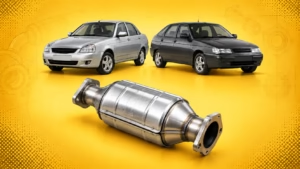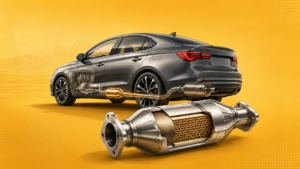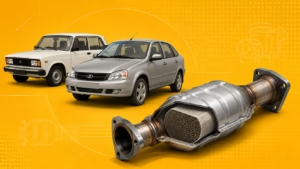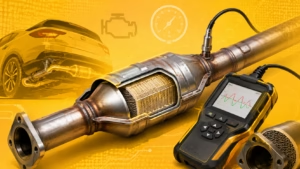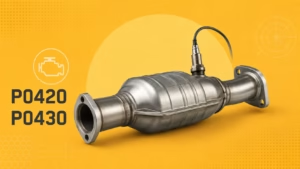
Introduction: A low-efficiency code means the car’s computer believes the emissions system is not cleaning exhaust gas as well as expected. It does not prove that the catalytic converter has failed. Exhaust leaks, sensor faults, engine misfires, oil burning, and fuel mixture problems can trigger the same warning. Before replacing the catalytic converter in a car, drivers should confirm the code, inspect related parts, and fix any engine fault that could damage a new unit.
Key Takeaways
- A low-efficiency code is a warning, not a final diagnosis.
- P0420 usually refers to Bank 1, while P0430 refers to Bank 2.
- Exhaust leaks and oxygen sensor faults can imitate converter failure.
- Misfires, rich fuel mixtures, and oil burning can damage the emissions system.
- Clearing the code does not repair its cause.
- Accurate testing should come before parts replacement.
- An old or damaged unit should enter a responsible recycling channel.
What does a low-efficiency code mean?
It means the engine control system has detected that exhaust cleaning performance is below the level it expects. The code describes a measured result, but it does not identify the exact failed part.
Modern vehicles use oxygen sensors before and after the catalytic converter. The upstream sensor helps the engine control fuel delivery. The downstream sensor lets the computer monitor how well the exhaust treatment system is working.
A healthy unit stores and processes oxygen as exhaust passes through it. This usually makes the downstream sensor signal steadier than the upstream signal. If both signals begin to look too similar, the computer may record catalytic converter efficiency below threshold.
The warning often appears as P0420 or P0430. A scan tool may show a longer description, such as “catalyst system efficiency below threshold.” That wording sounds precise, yet several mechanical and electrical faults can produce the same reading.
Drivers who want a simple review of the part and its role can read this guide to the basics of converters for Kazakhstan drivers.
What do P0420 and P0430 tell the driver?
P0420 points to low catalyst efficiency on Bank 1. P0430 reports the same type of problem on Bank 2.
- Efficiency tested low on Bank 1
- The monitor detected weak exhaust treatment
- Inspection should start on that side first
- It does not confirm the converter is bad
- It does not rule out a sensor fault
- It does not rule out an exhaust leak or engine issue
- Efficiency tested low on Bank 2
- The same type of monitor failed
- Compare readings with the opposite bank
- It does not prove converter failure by itself
- It does not exclude oxygen sensor problems
- It does not exclude misfire, rich running, or leaks
Bank 1 is the side of the engine that contains cylinder number one. On an inline engine, there is normally only one bank. V-shaped and flat engines can have two banks, although exact layouts vary by vehicle.
The phrase catalyst system efficiency too low bank 1 is commonly linked with P0420. It tells the technician where the computer detected the issue. It does not confirm whether the cause is the converter, a sensor, an exhaust leak, or an engine problem.
What do common low-efficiency codes show?
The code identifies the affected exhaust bank and the type of test that failed. It should guide inspection rather than trigger immediate replacement.
| Code or message | Plain-language meaning | Useful first checks |
|---|---|---|
| P0420 | Efficiency is below the expected level on Bank 1 | Check for related codes, leaks, misfires, and sensor issues |
| P0430 | Efficiency is below the expected level on Bank 2 | Compare both banks and inspect the affected exhaust side |
| Oxygen sensor code | A sensor or its circuit has reported a fault | Test wiring, connectors, sensor response, and exhaust leaks |
| Misfire code | One or more cylinders are not burning fuel correctly | Repair the misfire before judging exhaust efficiency |
| Fuel mixture code | The engine is running too rich or too lean | Check air, fuel, ignition, and intake conditions |
Can another fault trigger the warning?
Yes. A low-efficiency warning can result from faults outside the exhaust treatment unit, especially when they change sensor readings or exhaust composition.
This is why diagnosis should start with all stored and pending codes. If the car also has misfire, fuel trim, air measurement, or oxygen sensor codes, those clues may reveal the underlying cause.
Can an exhaust leak cause the code?
Yes. A leak can allow outside air into the exhaust stream and disturb oxygen sensor readings.
Leaks may occur at joints, flanges, gaskets, welds, flex sections, or damaged pipe. Small leaks can be hard to hear, especially when the engine is warm. Soot marks, ticking noises during a cold start, and damaged connections can help locate them.
A leak near either oxygen sensor deserves attention. Repair it first, clear the stored code, and let the vehicle complete its normal monitoring cycle before drawing a conclusion about the catalytic converter.
Can an oxygen sensor create a false warning?
Yes. A slow, biased, damaged, or poorly connected sensor can provide misleading data to the engine computer.
However, seeing similar upstream and downstream readings does not automatically mean the rear sensor is bad. The same pattern can appear when exhaust treatment has truly weakened. A technician should examine live data, sensor response, wiring, connectors, heater operation, and other codes.
Replacing sensors without testing can waste money. The correct question is not whether a sensor is old. It is whether its signal accurately reflects the exhaust gas passing it.
Can engine problems damage the system?
Yes. Misfires, excess fuel, oil consumption, and coolant entering the cylinders can overheat or contaminate the internal material.
A flashing engine warning light often points to a serious running fault that needs quick attention. Continuing to drive through a severe misfire may send unburned fuel into the exhaust. That places extra heat and stress on the catalytic converter.
Heavy oil use can leave deposits. Coolant entering the combustion chamber may also contaminate exhaust parts. If these root causes remain, a replacement unit may suffer the same damage.
How should a low-efficiency code be diagnosed?
Diagnosis should move from code confirmation to engine checks, leak inspection, sensor testing, and converter evaluation. This order reduces the chance of replacing a good part.
A scan tool is useful, but the code alone is not enough. Good diagnosis combines code data with a physical inspection and the vehicle’s repair history.
- Record every code. Note stored, pending, and permanent codes before clearing anything.
- Review freeze-frame data. This shows the operating conditions present when the fault was recorded.
- Check how the engine runs. Rough idle, poor acceleration, smoke, oil loss, or high fuel use may point to a wider issue.
- Inspect the exhaust. Look for leaks, impact damage, loose shields, damaged wiring, and altered components.
- Assess sensor data. Compare upstream and downstream signals under suitable operating conditions.
- Repair related faults first. Misfires, fuel mixture faults, and leaks can make any later test unreliable.
- Confirm the repair. The vehicle must complete its monitoring checks without the fault returning.
Why does freeze-frame data matter?
Freeze-frame data shows when the computer detected the problem. It may include engine speed, temperature, load, and fuel control information.
This snapshot helps a technician repeat the conditions that produced the code. For example, a fault that appears during steady road driving may not show itself during a short workshop idle test.
Drivers should avoid clearing codes before a workshop visit. Clearing them can remove useful evidence and reset emissions monitors. It may also turn the warning light off for a short time without fixing anything.
Should the code be cleared to see if it returns?
It may be cleared after the initial data has been recorded, but clearing it is not a repair. The fault may return only after the car completes the required monitor under suitable driving conditions.
The California Bureau of Automotive Repair explains that diagnostic trouble codes and readiness information form part of emissions inspection checks in its jurisdiction. Local rules differ, but the practical lesson applies anywhere: recently erased data can leave monitors incomplete and hide the history a technician needs.
When is the unit truly at the end of its service life?
It is likely worn out when testing confirms poor exhaust treatment after related engine, sensor, and leak faults have been ruled out. Physical breakage, melting, severe contamination, or internal blockage can also justify replacement.
Age and distance alone do not provide a complete answer. Driving conditions, maintenance, fuel control, oil consumption, impacts, and past engine faults all affect service life. More detail is available in QazaqKat’s guide to converter lifespan and common wear factors.
What signs support a confirmed failure?
Repeated low-efficiency codes, failed performance tests, physical damage, and a lack of other causes can support the diagnosis. Several signs together are more useful than one symptom alone.
- The same code returns after related faults have been repaired.
- Live sensor data continues to show poor exhaust treatment.
- The internal core is loose, cracked, melted, or contaminated.
- Exhaust flow is restricted and testing confirms a blockage.
- The vehicle lacks power because exhaust gas cannot pass freely.
- A qualified inspection finds no leak or sensor fault that explains the readings.
A rattling sound may suggest that the internal core has broken, but loose heat shields can make a similar noise. Loss of power may result from a blocked exhaust, yet ignition and fuel faults can also cause weak acceleration. Each sign needs confirmation.
What findings do not prove failure by themselves?
A warning light, one stored code, age, or high distance does not prove that the unit must be replaced. These are reasons to inspect, not final test results.
| Finding | What it may mean | What should happen next |
|---|---|---|
| P0420 or P0430 appears once | The monitor detected low performance during one test | Record data and check for related faults |
| Rear sensor signal changes often | Efficiency may be low, or the reading may be affected | Test the sensor, wiring, leaks, and engine condition |
| The car has high distance | Wear is possible | Use test results rather than distance alone |
| A rattle comes from below the car | The core or a heat shield may be loose | Inspect the exhaust safely on a lift |
| The warning returns after replacement | The root engine fault may remain | Check fuel control, misfires, oil use, and installation |
Can the warning affect fuel use or performance?
The code itself does not consume fuel. The engine fault behind it may increase fuel use, while a severely blocked exhaust can reduce power.
Drivers often ask, does the catalytic converter affect fuel consumption? A healthy unit mainly treats exhaust gas. It does not normally set the amount of fuel injected. However, faulty sensor feedback, rich running, repeated misfires, or exhaust restriction may change how the engine performs and how much fuel it uses.
Low catalytic converter efficiency without blockage may cause little or no change in how the car feels. That is why many drivers first notice only the warning light. In contrast, a melted or collapsed core can restrict exhaust flow and lead to weak acceleration, excess heat, or difficulty reaching higher engine speeds.
Is it safe to keep driving?
A steady warning light may allow a short, careful trip for diagnosis if the car runs normally. A flashing light, severe power loss, overheating, strong fuel smell, or heavy smoke calls for prompt attention.
- Warning light is steady
- Car runs normally
- No smoke or strong fuel smell
- No overheating or severe power loss
- Fuel use suddenly increases
- Idle feels rough or performance drops
- Rattle, exhaust leak, or hot smell appears
- Light returns after being cleared
- Warning light is flashing
- Engine shakes badly or misfires
- Heavy smoke or strong fuel smell
- Overheating or extreme exhaust heat
- Severe power loss
Stop driving if the engine shakes badly or the exhaust area becomes extremely hot. Continuing under those conditions may worsen damage. Arrange safe transport to a workshop if there is any doubt.
The US Environmental Protection Agency describes vehicle pollution controls as part of the wider effort to reduce harmful transportation emissions. Although inspection rules vary by country, keeping the emissions system intact and functional remains the responsible course.
What should happen to a removed unit?
A removed unit should go to a professional acceptance and recycling service. It contains recoverable materials and should not enter ordinary waste.
QazaqKat purchases and processes units from private owners, repair workshops, dealerships, dismantling yards, and industrial partners across Kazakhstan. Its catalytic converter service uses professional evaluation methods and supports responsible recovery of platinum, palladium, and rhodium.
Do not cut, crush, burn, or open the removed part. Keep its identifying marks visible where possible. If a workshop replaces it, ask to retain the old unit or confirm where it will be sent.
For an evaluation or recycling inquiry, drivers can contact QazaqKat by phone at +7 708 838 63 26 or +7 707 470 85 33. Email inquiries can be sent to info@qazaqkat.kz. The office is at 9 Kendala Street, Astana 010006, Kazakhstan.
For a complete overview of this topic, read Catalytic Converter Basics for Kazakhstan Drivers.
Summary
A low-efficiency code means the vehicle’s computer has measured weak emissions performance. It does not, by itself, prove that the catalytic converter in a car needs replacement.
Start by recording every code and checking for misfires, fuel mixture faults, oil use, exhaust leaks, wiring damage, and oxygen sensor problems. Repair those issues first. Replace the catalytic converter only when testing confirms that it can no longer perform its job or when physical damage makes continued use unsafe.
If replacement is confirmed, responsible recycling keeps useful precious metals in circulation and reduces waste. QazaqKat can provide professional acceptance, clear communication, and recycling support for vehicle owners and automotive businesses in Astana and across Kazakhstan.
FAQ
Does P0420 always mean the converter is bad?
No. P0420 means the computer detected low efficiency on Bank 1. Exhaust leaks, sensor issues, misfires, fuel mixture faults, oil burning, and other engine problems should be checked before replacement.
What is the difference between P0420 and P0430?
P0420 refers to Bank 1, which contains cylinder number one. P0430 refers to Bank 2 on engines that have a second bank. Both codes describe the same general type of efficiency problem.
Can I remove the warning by disconnecting the battery?
Disconnecting the battery may clear some stored data, but it does not repair the cause. The warning can return after the vehicle repeats its monitor. Clearing data may also make diagnosis harder.
Can a new oxygen sensor fix a low-efficiency code?
It can if testing proves that the sensor or its circuit is faulty. Replacing a sensor without checking its signal, wiring, heater circuit, and nearby exhaust for leaks may not solve the problem.
Should I recycle the old part after replacement?
Yes. Professional recycling allows valuable platinum, palladium, and rhodium to be recovered for reuse. Keep the removed unit intact and contact a qualified acceptance service rather than placing it in ordinary waste.