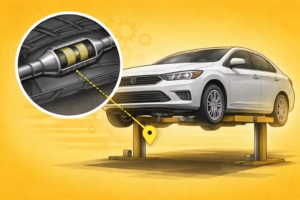
Introduction: Finding the catalytic converter is easier when you know what you are looking for and where car makers usually place it. That matters if you are inspecting exhaust damage, planning a repair, or preparing a unit for recycling without crushing or cutting the wrong section. If you need a clear, legal way to sell a used unit, Qazaqkat also supports catalytic converter in a car acceptance and recycling across Kazakhstan.
Key Takeaways
- The converter is almost always on the exhaust path between the engine and the muffler.
- Many cars place it close to the engine so it heats up fast.
- Look for a metal canister with heat shielding and sensor wiring nearby.
- A resonator and a muffler are usually larger and sit farther back.
- Cutting the wrong pipe section can reduce recycling value and create safety risks.
- Use the VIN plate or exhaust routing under the car to confirm the layout before removal.
What part are we talking about?
A catalytic converter is a sealed metal housing that sits on the exhaust line. Exhaust gases pass through it, and the internal core helps reduce harmful emissions. If you want a deeper, step-by-step explanation of the job it does, see the pillar guide Catalytic Converter in a Car: How It Works & Why It Matters.
From a distance, it can look like a “fat” section of pipe. Up close, you often notice:
- Heat shields (thin metal covers or plates around the body)
- Oxygen sensor wiring nearby (many cars have sensors before and after the unit)
- Weld seams or flanges where it joins other exhaust parts
Where the catalytic converter is located on most cars?
On most vehicles, where the catalytic converter is located is fairly consistent: it sits along the exhaust flow after the exhaust manifold and before the muffler. Many designs keep it closer to the engine so it reaches working temperature sooner. This general placement is also described by Edmunds.
In plain terms, if you follow the exhaust pipe from the engine toward the rear of the car, the converter is usually one of the first large “bulges” you meet.
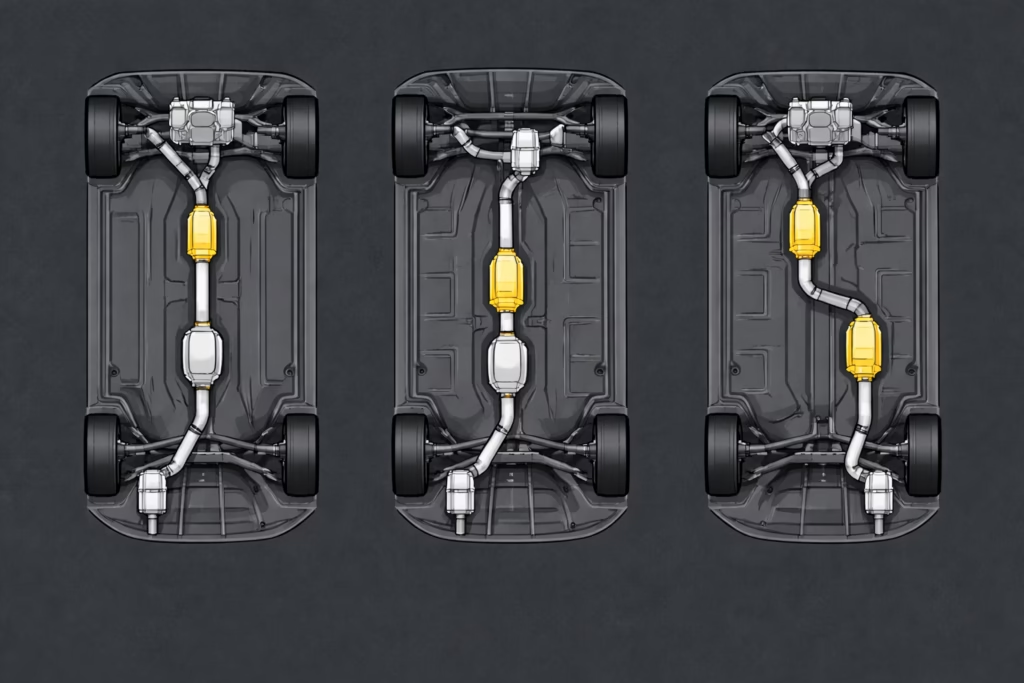
Common layouts you will see under real cars
- Close-coupled converter: Mounted near the engine bay, sometimes right after the manifold.
- Underfloor converter: A bit farther down the pipe under the cabin floor.
- Two-converter setups: Some cars use a small unit near the engine plus another under the floor.
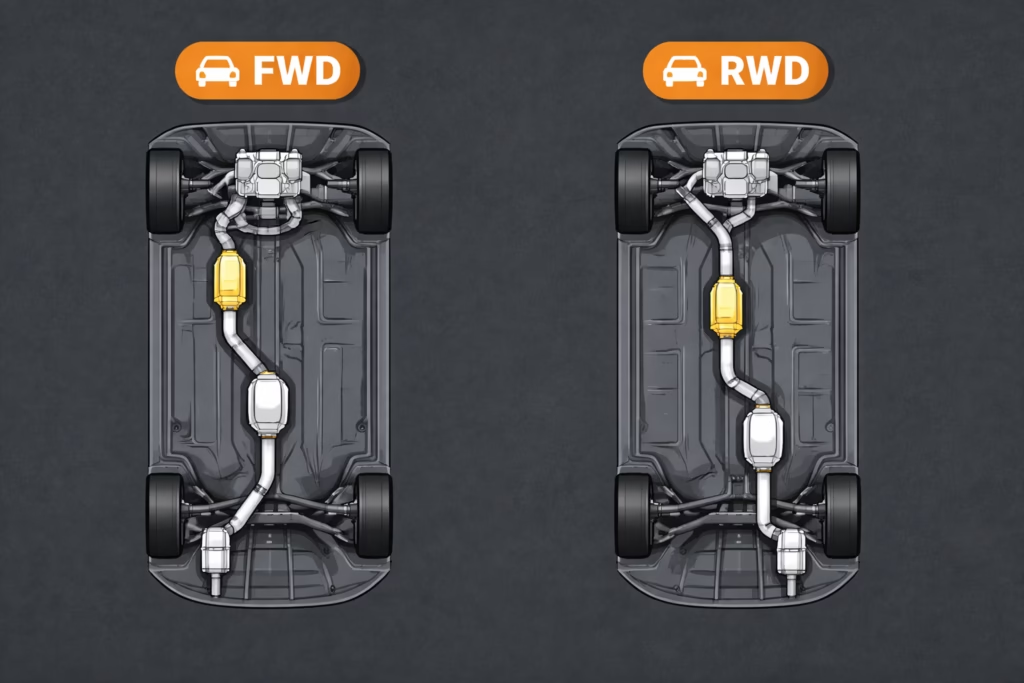
Where the catalytic converter is on front-wheel-drive vs rear-wheel-drive?
If you are trying to confirm where the catalytic converter is, start with the engine orientation.
Front-wheel-drive (transverse engine): The converter is often tucked near the front of the car, close to the radiator side of the engine bay or just under the front seats. Access can be tight, and you may need to look from underneath.
Rear-wheel-drive (longitudinal engine): The exhaust usually runs straight back. You may see the converter a bit farther from the engine compared with some compact FWD cars, but it still sits well ahead of the muffler.
Trucks and SUVs: The exhaust line is longer. That makes it easier to confuse parts. Always trace the pipe from the engine back, and identify each “can” by features, not by guesswork.
How to tell a catalytic converter from a resonator or muffler
This table shows quick visual cues that help you separate the converter from other exhaust “cans” before you remove or transport parts for evaluation.
| Part | Typical position | Common clues | What people confuse it with |
|---|---|---|---|
| catalytic converter in a car | Usually closer to the engine, before the muffler | Often has heat shielding and sensor wiring; heavier for its size | exhaust system catalytic converter vs resonator (words get mixed) |
| Resonator | Mid-pipe, often under the cabin | Longer, smoother can; usually no sensors attached | muffler catalytic converter (common mix-up in casual speech) |
| Muffler | Near the rear bumper | Largest can; tailpipe exits from it; focused on sound | Resonator |
How can you confirm the correct part before removal?
Use a fast, repeatable check. It saves time in a workshop and prevents accidental damage at a dismantling yard.
- Start at the engine and follow the pipe back. The converter appears before the bigger rear silencer.
- Look for sensor wiring. Many setups have oxygen sensors in the pipe near the converter.
- Check for heat shields and a compact, dense body. A converter often looks “short and thick” compared with a resonator.
- Identify flanges vs slip joints. Some converters bolt in with flanges; many resonators and mufflers use clamps.
- Do not rely on sound alone. A bad muffler can also cause loud noise, so confirm by location and shape.
For an easy refresher on what the part does and why cars use it, this guide helps: Catalytic Converter Explained Simply.
What does it mean when people say catalytic converter in the exhaust system?
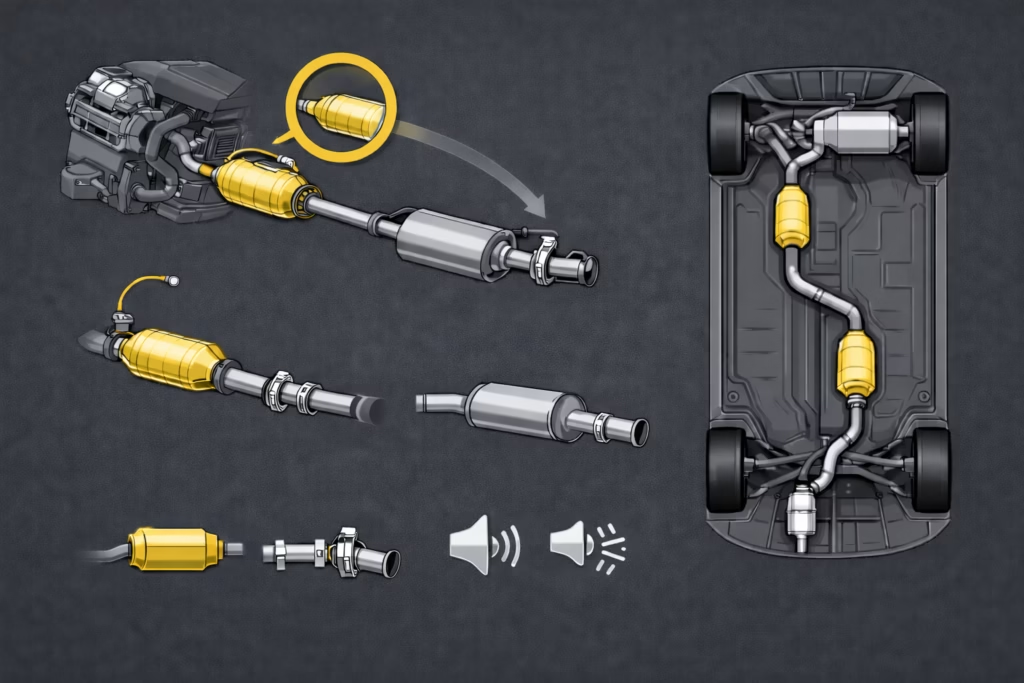
The phrase catalytic converter in the exhaust system simply means the converter is one component in a longer chain of parts that carry exhaust away from the engine. That chain can include the manifold, flex pipe, sensors, resonator, muffler, and tailpipe.
Many manufacturers place the converter where it can warm up quickly and do its job soon after startup. Mango Automotive also notes that converters are part of the exhaust path and are positioned to manage emissions effectively.
Why location matters for recycling and for avoiding damage
If you are removing an exhaust system catalytic converter for evaluation, rough handling can create problems. Dents, heavy cuts through the body, and contamination from fluids can make identification harder and can affect safe processing.
Common mistakes that cause avoidable damage:
- Cutting too close to the converter shell and slicing into the metal body
- Crushing the unit while moving a full exhaust line
- Mixing resonators and mufflers into the same pile and mislabeling parts
A simple workflow helps: photograph the unit on the car, mark cut points on straight pipe sections, and keep sensor connectors intact when possible. If your team handles many vehicles, write down the vehicle model and year next to each removed unit.
If you want a transparent process for acceptance and recycling, Qazaqkat provides where the catalytic converter is located identification support during intake, so the correct component gets evaluated and processed.
A quick look at a catalytic converter cross-section
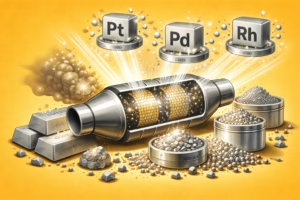
Seeing a catalytic converter cross-section once makes identification easier in real life. The outer shell is just the container. The useful part sits inside the catalytic converter as a ceramic or metallic honeycomb core. That core carries precious metals used to support the chemical reactions that reduce pollutants.
Because the core is brittle, hard drops can crack it. A cracked core may rattle, but more importantly, it can shed dust and fragments. So if you are transporting used parts, keep them stable in a box or a tire stack, and avoid tossing them into a metal bin.
For maintenance context and common failure signs, you can also read Catalytic Converter in a Car: Purpose, Operation, and Maintenance.
Summary
The converter usually sits early in the exhaust line, often closer to the engine than many drivers expect. Once you know the shape, the heat shielding, and the sensor clues, you can spot it fast and avoid confusing it with a resonator or muffler. That saves time in a workshop and helps dismantling yards prevent accidental damage.
If you are preparing parts for responsible recycling in Kazakhstan, Qazaqkat can help with acceptance and evaluation of the catalytic converter in the exhaust system, with a clear and practical process for both private owners and automotive businesses.
FAQ
Can I see the converter from the top of the engine bay?
Sometimes, yes. On some cars it sits high and close to the manifold. On many others, you will only see it clearly from underneath.
Is the converter always before the muffler?
Yes. The muffler is a rear sound control part, while the converter sits earlier on the exhaust route.
How do I avoid mixing up a resonator and a muffler?
Use location. Resonators often sit mid-car, while mufflers usually sit near the rear bumper and connect to the tailpipe outlet.
Do all cars have oxygen sensors next to the converter?
Many do, but not every layout looks the same. If you see sensor wiring before and after one “can,” that part is a strong converter candidate.
What should I avoid doing when removing a used unit for recycling?
Avoid crushing, cutting into the shell, and dropping it on hard surfaces. Keep it clean and stable so it can be identified and handled safely.