Introduction: A catalytic converter is a small metal can in your exhaust that helps make your car’s fumes less harmful. Drivers often notice it only when a warning light comes on, power drops, or someone suggests removing it. This guide explains the basics in plain language – what it does, why it exists, and what practical steps to take if you suspect a problem or you’re planning to sell a used unit in Kazakhstan.
So, what does a catalytic converter do in simple terms?
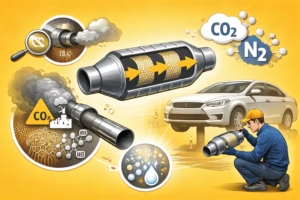
It “cleans” exhaust gases before they leave the tailpipe. More precisely, it helps convert several toxic pollutants into less harmful gases by using heat and a special coated material inside the unit.
Think of it like a chemical filter that works at high temperature. Your engine creates exhaust as it burns fuel. The converter sits in the exhaust stream and helps change the chemistry of that exhaust as it passes through.
Where is it located on the car?
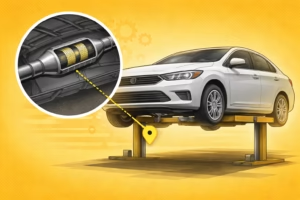
Most cars have the catalytic converter in the exhaust system, usually under the vehicle, between the engine and the muffler. On many models it’s close to the engine so it heats up faster. Some vehicles have more than one converter (for example, one near the engine and another further down the exhaust line).
If you want the longer “where it sits and how it behaves on real roads” version, Qazaqkat also covers this topic in more depth in Catalytic Converter in a Car: What It Is & Why It Matters.
What is called a catalyst, and why does it matter here?
A catalyst is a substance that speeds up a chemical reaction without being “used up” in the process. Inside a catalytic converter, the catalyst is a thin coating on a honeycomb structure. Exhaust gas touches that surface, and reactions happen faster than they would on their own.
The reason this matters is simple: the converter doesn’t just trap pollution like a dust filter. It changes the gases through chemical reactions. That’s why temperature, engine tune, and fuel quality can affect how well it works.
What’s inside the converter (without the chemistry headache)?
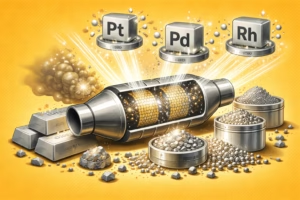
Inside the metal shell is a ceramic or metal honeycomb (often called the substrate). It has thousands of small passages to create a large surface area. That surface is coated with “washcoat,” and then with tiny amounts of precious metals – typically platinum, palladium, and rhodium – that help the reactions occur.
Those metals are a key reason converters get recycled instead of thrown away. Proper recycling helps recover valuable materials and keeps them in the supply chain rather than in landfills.
What does it actually convert?
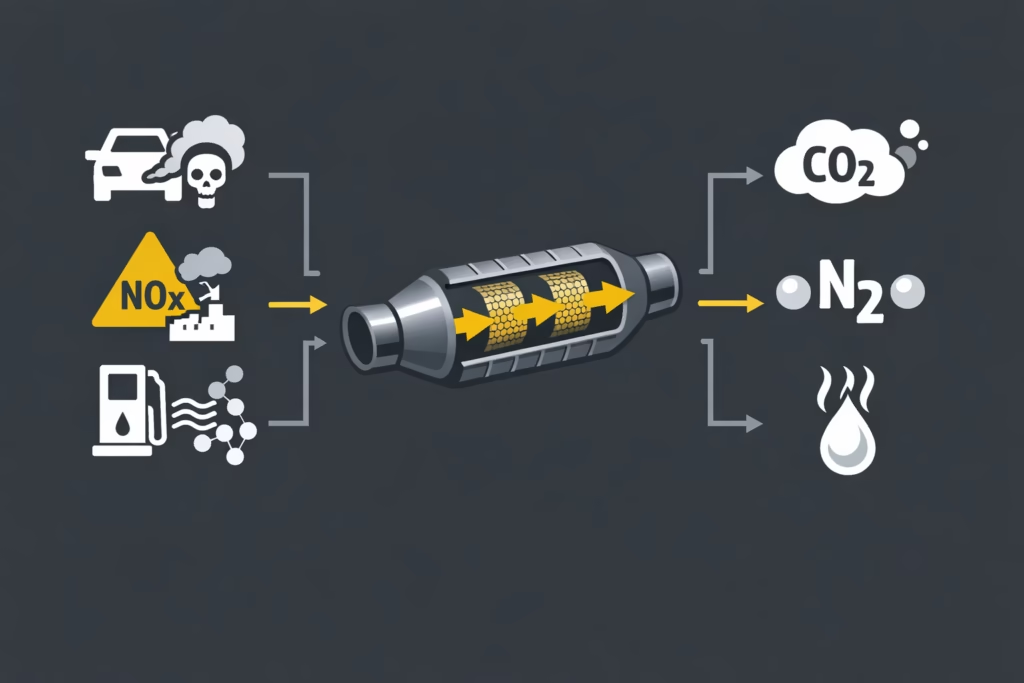
Most modern gasoline cars use a “three-way” catalytic converter that targets three main pollutants: carbon monoxide (CO), nitrogen oxides (NOx), and unburned hydrocarbons (HC). It converts them into gases that are less harmful, mainly carbon dioxide (CO2), nitrogen (N2), and water vapor (H2O).
The U.S. Environmental Protection Agency notes that catalytic converters have been a key technology for reducing harmful vehicle emissions as part of decades of clean air progress. EPA overview of accomplishments in reducing air pollution from transportation
“Catalytic converter” definition vs meaning – are they different?
In everyday speech, people use “definition” and “meaning” the same way. Still, it helps to separate them:
- Definition: what it is in one sentence.
- Meaning: what it does for you in real life.
A clear, plain-language description is widely available: a catalytic converter is an exhaust emission control device that converts toxic gases and pollutants into less toxic pollutants through chemical reactions. Plain-language catalytic converter overview
How do I know if mine is failing?
Start with the symptoms you can feel, then confirm with proper diagnostics. Don’t rely on guesswork because many issues mimic converter problems (for example, a bad sensor can trigger similar warnings).
Common signs drivers report:
- Loss of power, especially on acceleration or uphill
- Check engine light (often tied to emissions efficiency codes)
- Rattling noise under the car (possible broken substrate)
- Strong exhaust smell, or exhaust that seems “off”
- Poor fuel economy that doesn’t match your usual driving pattern
If the converter is clogged or melted, the engine can’t “breathe” out. That backpressure can cause sluggish performance and extra heat.
Can winter driving in Kazakhstan affect it?
Yes, indirectly. Cold starts, long warm-up idling, short city trips, and stop-start traffic can keep the exhaust cooler for longer. A converter needs heat to work well. When it stays cooler, it can take longer to reach effective operation.
Also, repeated misfires or rich fuel mixtures can overheat the converter. If you notice shaking at idle, strong fuel smell, or flashing warning lights, it’s smart to address the engine issue early. Fixing the cause can save the converter.
Quick answer: Is it okay to remove a catalytic converter?
For most drivers, removal creates more problems than it solves. It can increase pollution, trigger warning lights, and complicate resale, servicing, and inspection scenarios. If you’re dealing with theft damage or a failed unit, the more practical route is diagnosis, repair planning, and responsible recycling of the old part.
What should I do before selling a used catalytic converter?
First, identify what you have. Different vehicles and different converter types can vary a lot in recycling value. Second, avoid damaging the unit during removal and transport, because physical damage can reduce the accuracy of evaluation.
Here’s a simple, driver-friendly checklist:
- Take clear photos of the converter from multiple angles
- Share the vehicle make, model, year, and engine (if known)
- Note whether it’s original or aftermarket (if you know)
- Keep the unit dry and free from extra debris
When you’re ready for a professional, transparent process, Qazaqkat explains how evaluation and acceptance works on its service page for catalytic converter definition. It’s a helpful reference if you want to understand the steps before you call.
What affects a converter’s recycling value (without talking about metal prices)?
Several practical factors usually matter:
- Vehicle and converter type: different platforms use different loadings and designs
- Original vs aftermarket: originals often differ in construction and content
- Condition: intact honeycomb versus melted, contaminated, or missing substrate
- Identification: visible markings can improve evaluation accuracy
In plain terms, buyers aren’t paying for the steel shell. They’re valuing what’s inside and how confidently it can be assessed and processed.
Table: Common situations and the safest next step
This table shows typical driver scenarios and a practical action you can take immediately.
| Situation | What it might mean | Action that usually helps |
|---|---|---|
| Check engine light with no drivability issues | Could be sensor, fuel trim, or converter efficiency | Scan codes at a workshop and fix root cause before replacing parts |
| Power loss and car feels “blocked” at higher RPM | Possible restriction in exhaust, including a clogged converter | Ask for backpressure or temperature checks as part of diagnostics |
| Rattling sound under the car | Substrate may be cracked or broken | Avoid long trips until checked, because fragments can worsen blockage |
| You removed a used converter during repair | You may have recyclable material that should be handled responsibly | Arrange acceptance with a specialist recycler and keep it intact for evaluation |
What makes Qazaqkat’s approach practical for drivers and workshops?
When you’re dealing with a used catalytic converter, you usually want two things: clarity and speed. Qazaqkat focuses on professional acceptance and recycling with transparent evaluation methods and straightforward communication, which is useful for private owners as well as workshops, dismantling yards, and fleet partners.
If you want to understand the real-life workflow – from what the part does in the car to how owners handle replacement – the Qazaqkat guide on catalytic converter—what is it and why it matters gives extra context that connects the “definition” to everyday maintenance decisions.
When you’re ready to move from questions to action, the service page for meaning of catalytic converter in recycling terms is a good next step. It clarifies how acceptance typically works and what information helps an accurate assessment.
Summary
A catalytic converter helps reduce harmful emissions by changing exhaust gases through catalytic reactions on a coated honeycomb structure. It’s easy to overlook until it fails, but the signs often show up as warning lights, rattling, or power loss. If you’re replacing a unit or selling a used one, keep it intact, document it well, and work with a specialist recycler. Qazaqkat supports that process with professional acceptance and responsible recycling across Kazakhstan, with clear communication from first question to final handover.
FAQ
What is the simplest way to explain a catalytic converter to a new driver?
It’s a device in the exhaust that helps make the gases coming out of your car less harmful by changing their chemical makeup when the exhaust is hot.
Does a catalytic converter affect fuel economy?
When it’s healthy, it shouldn’t noticeably hurt fuel economy. If it becomes clogged or damaged, the engine can lose efficiency and power, and fuel use can rise.
Can a bad oxygen sensor look like a bad catalytic converter?
Yes. A faulty sensor, misfire, or fuel system issue can trigger similar warning codes. A proper scan and diagnosis helps you avoid replacing the wrong part.
Why do catalytic converters contain precious metals?
Those metals act as catalysts. They speed up the chemical reactions that convert pollutants into less harmful gases, and they can be recovered through responsible recycling.
If I’ve removed a used converter, what should I do next?
Keep it intact, note the vehicle details if you can, and contact a professional acceptance and recycling company for evaluation. That keeps the process clean, traceable, and environmentally responsible.